//Java class Solution { public ListNode removeNthFromEnd(ListNode head, int n) { ListNode dummy = new ListNode(0, head); int length = getLength(head); ListNode cur = dummy; for (int i = 1; i < length - n + 1; ++i) { cur = cur.next; } cur.next = cur.next.next; ListNode ans = dummy.next; return ans; }
public int getLength(ListNode head) { int length = 0; while (head != null) { ++length; head = head.next; } return length; } }
复杂度分析
时间复杂度:O(L),其中 L 是链表的长度。
空间复杂度:O(1)。
(2)栈
思路及算法
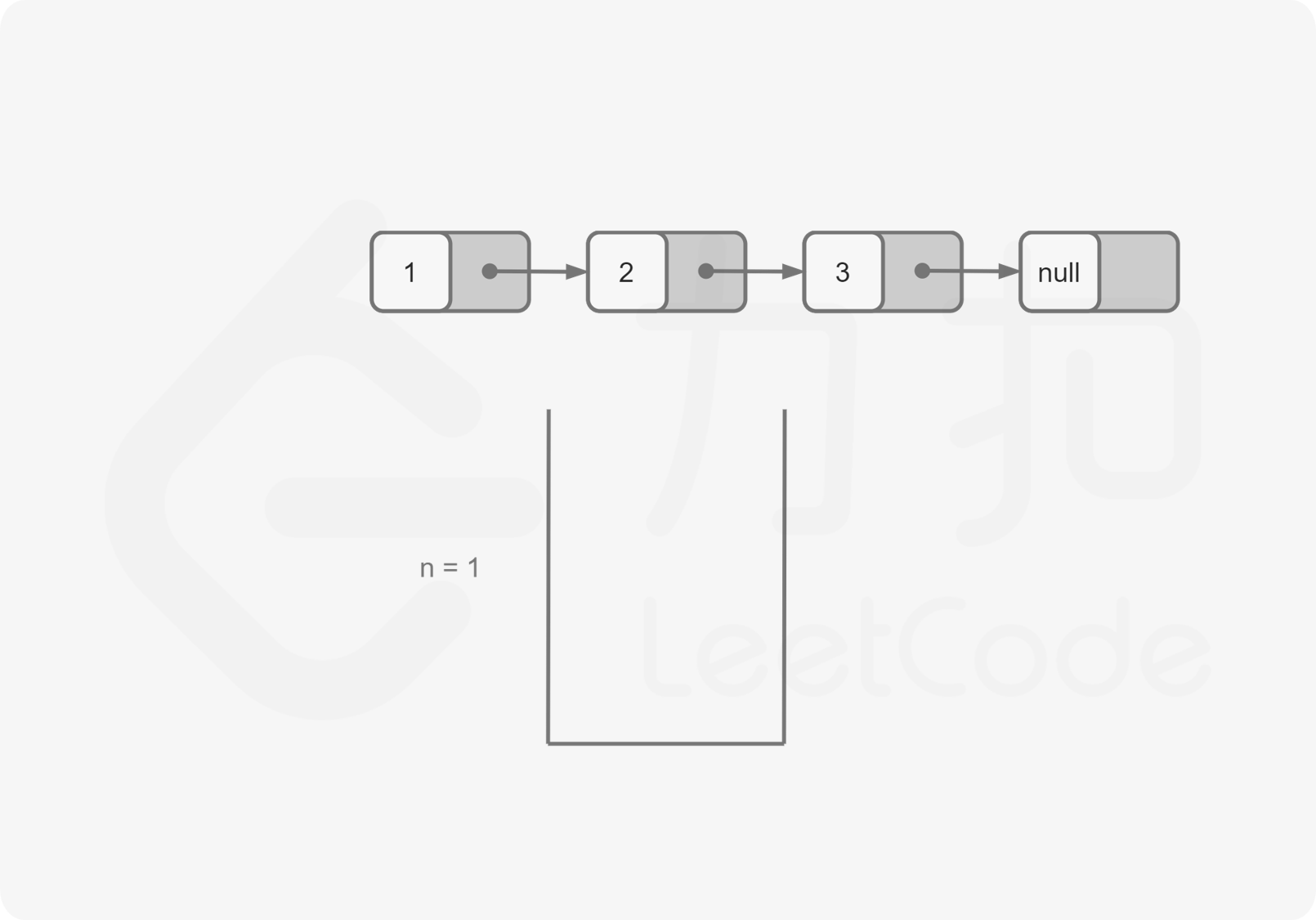
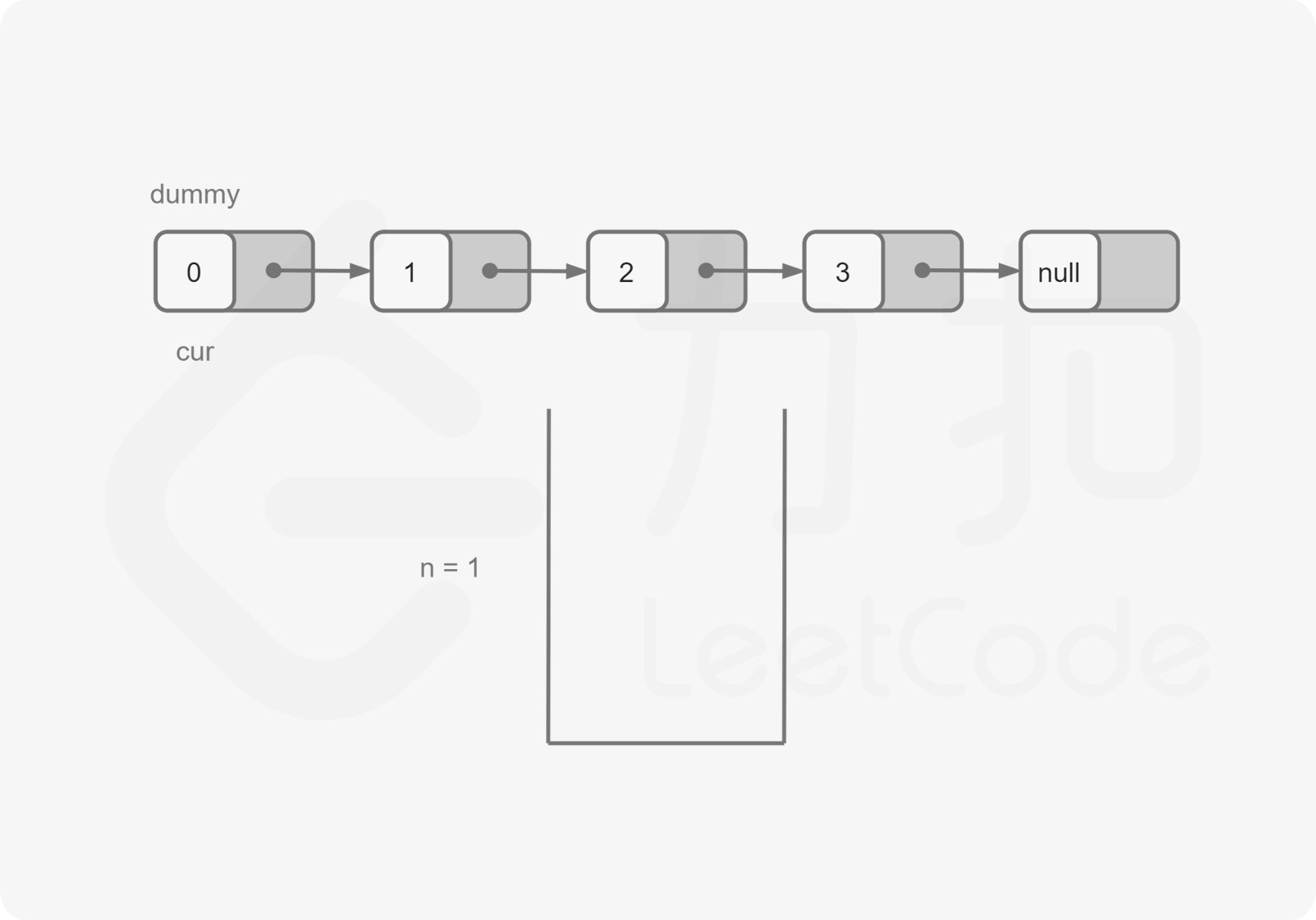
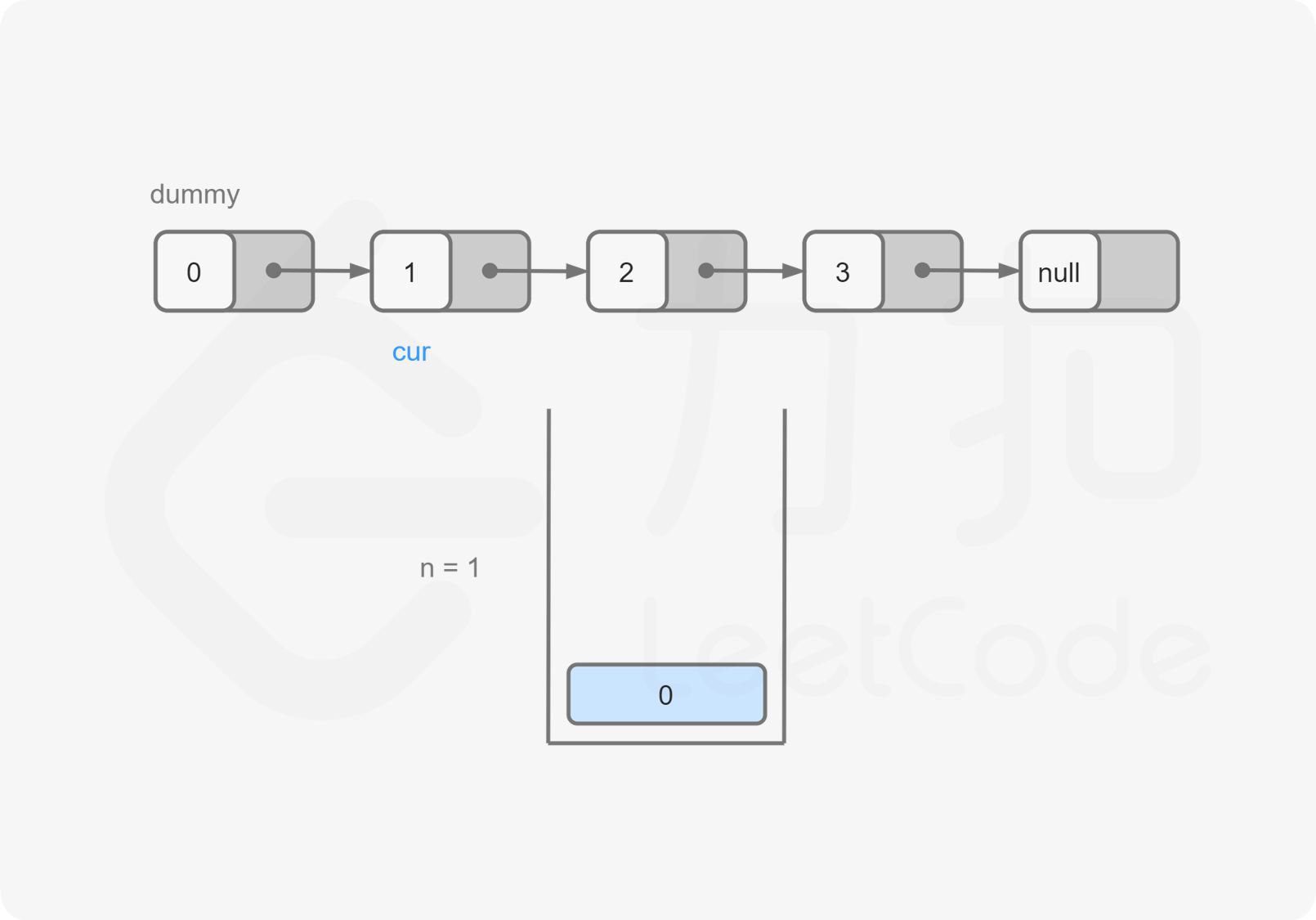
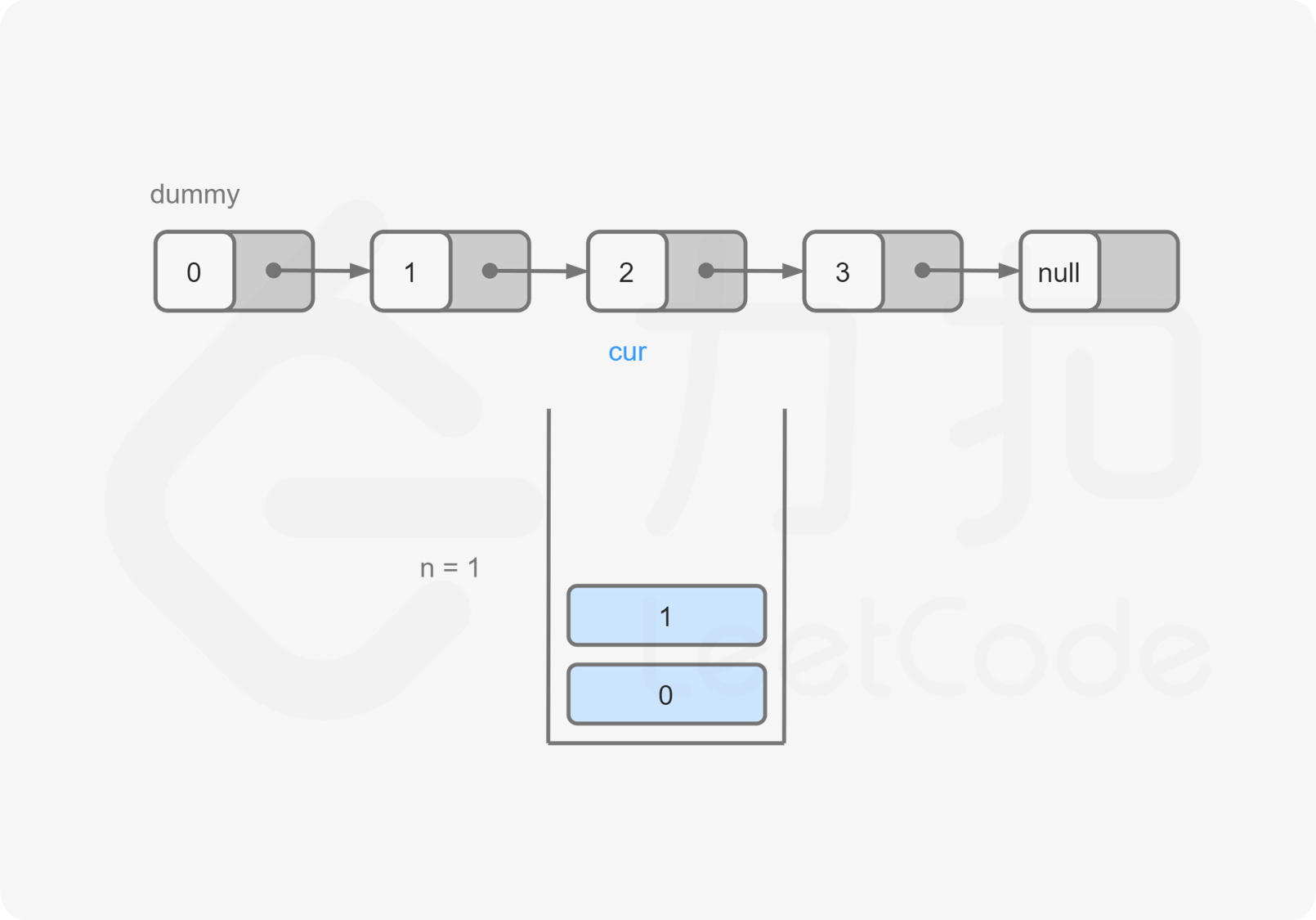
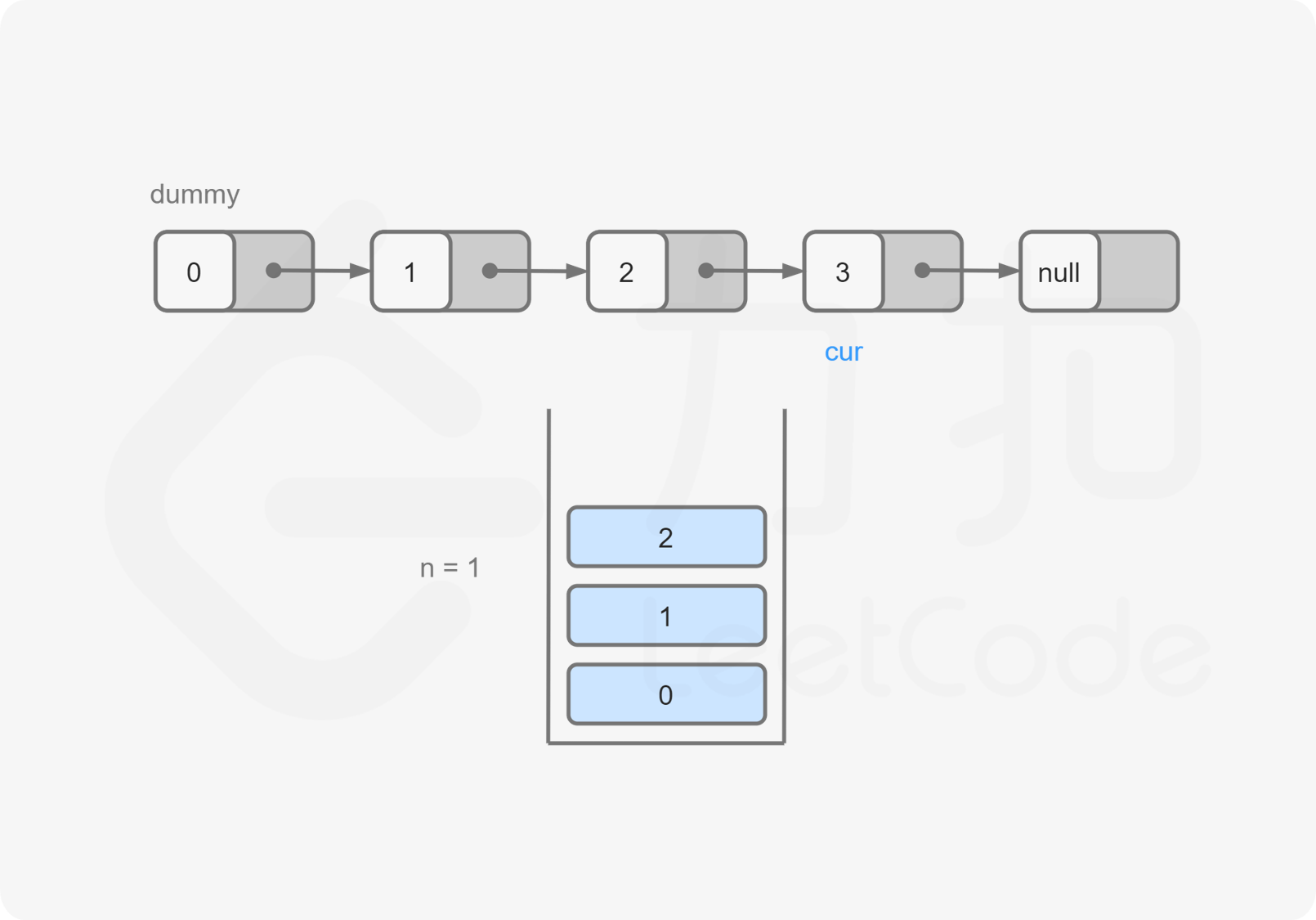
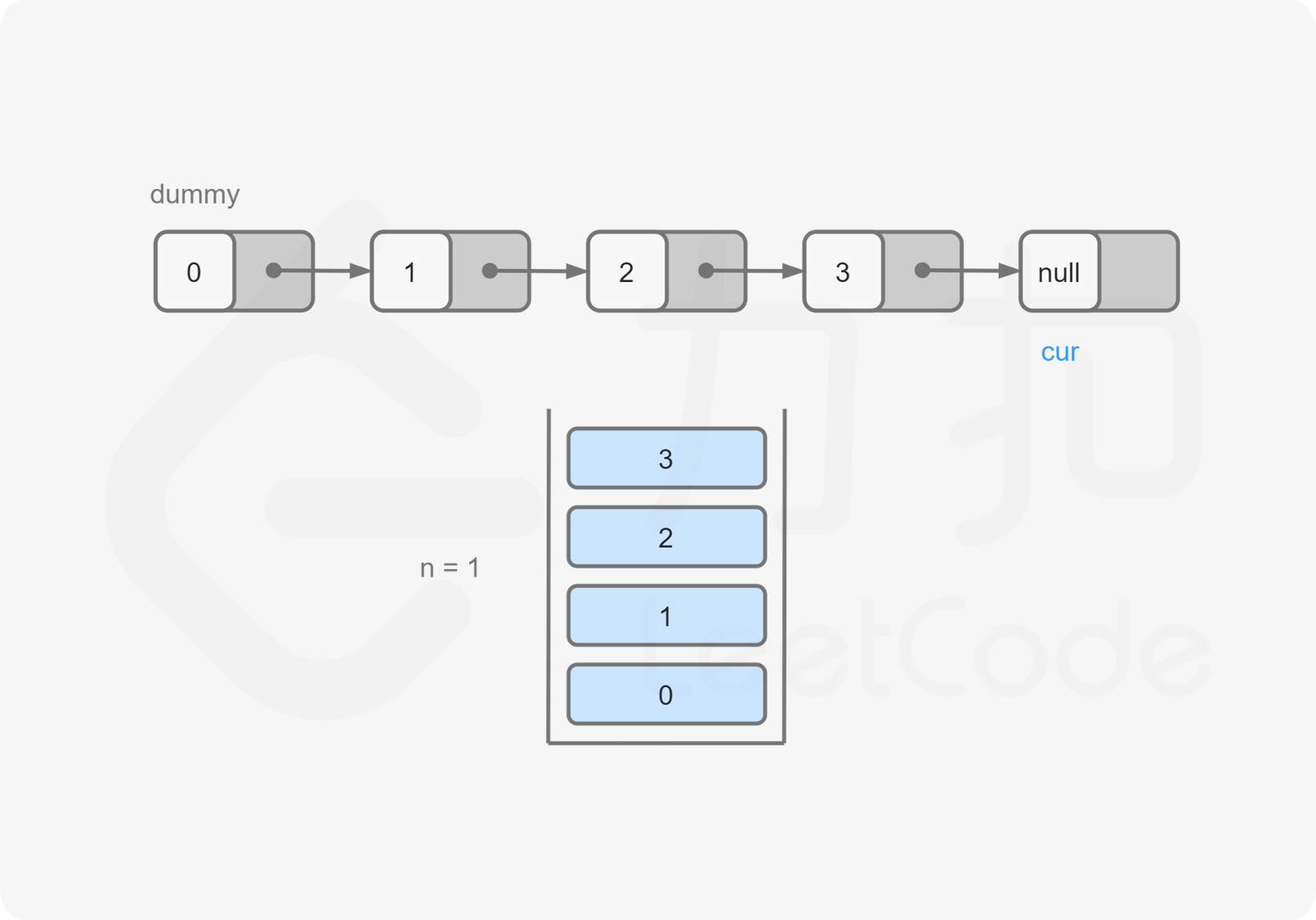
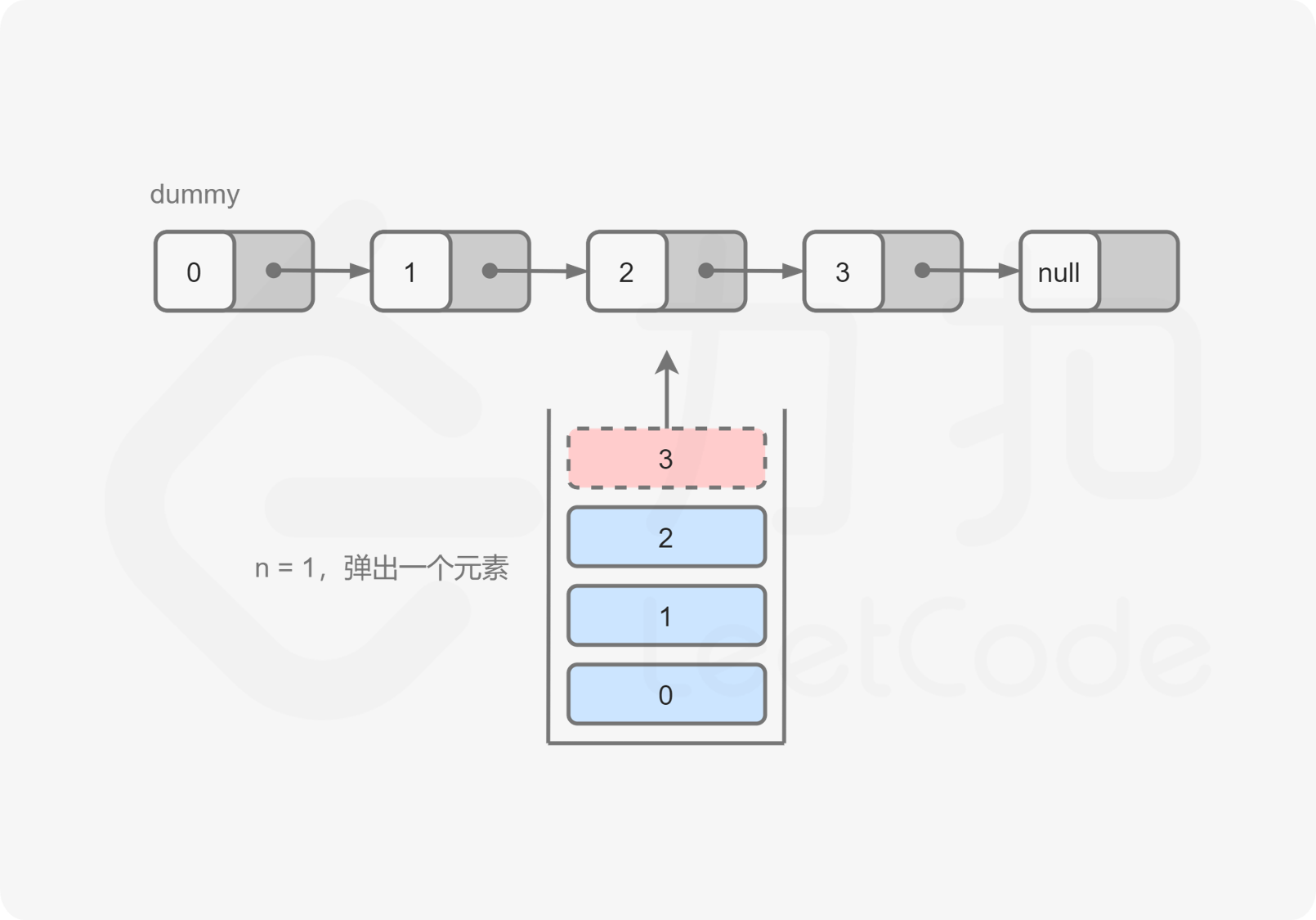
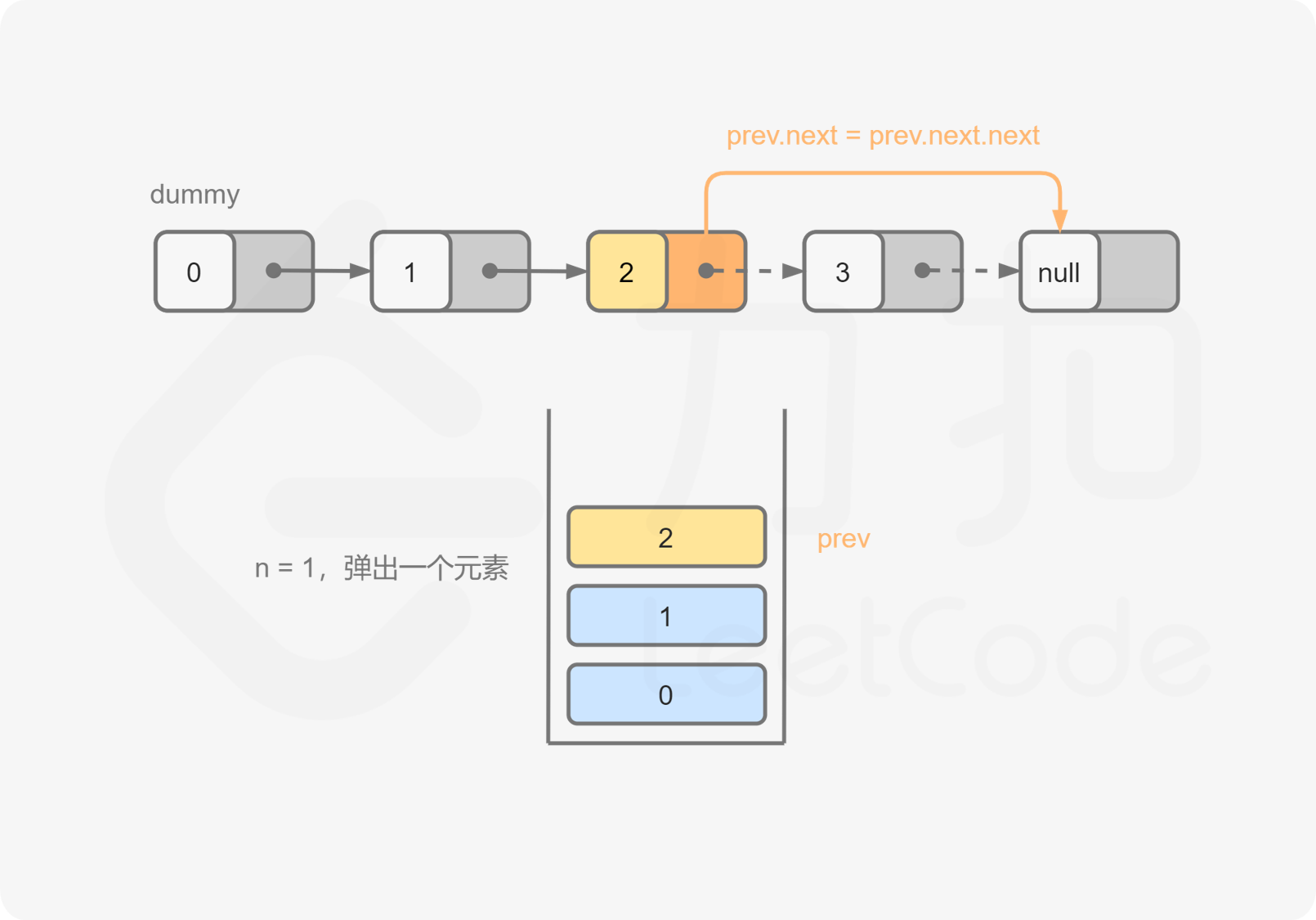
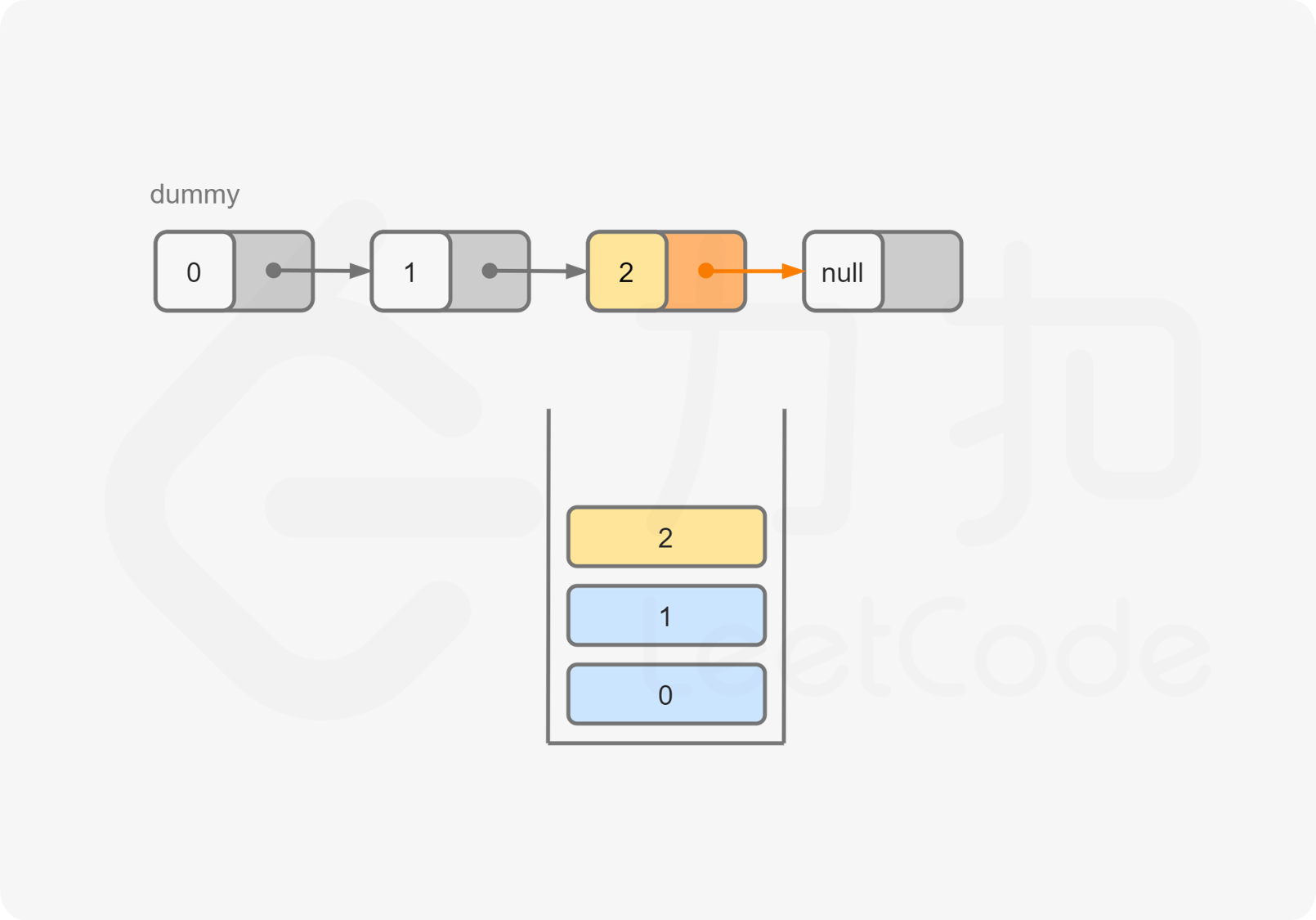
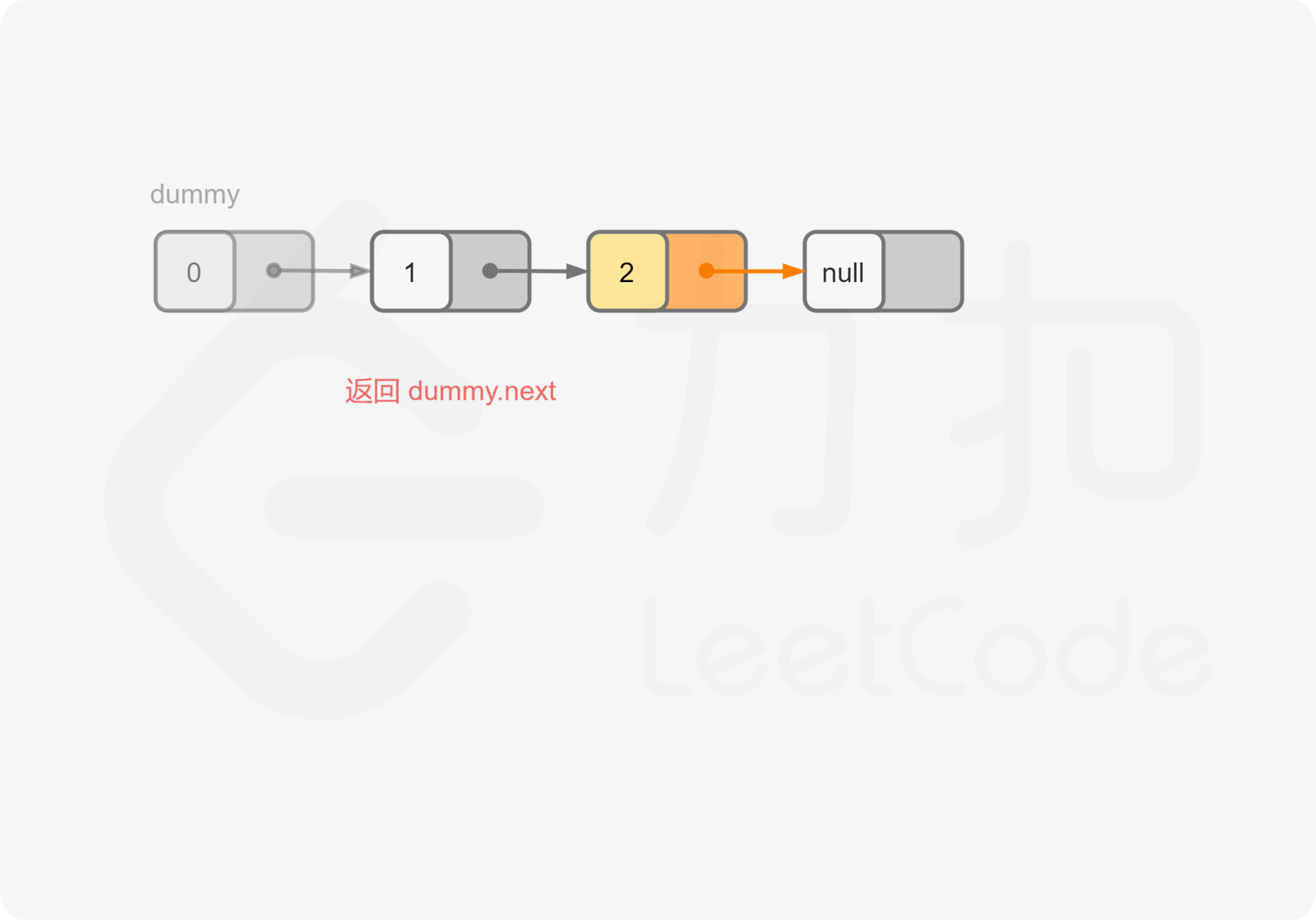
我们也可以在遍历链表的同时将所有节点依次入栈。根据栈「先进后出」的原则,我们弹出栈的第 n 个节点就是需要删除的节点,并且目前栈顶的节点就是待删除节点的前驱节点。这样一来,删除操作就变得十分方便了。
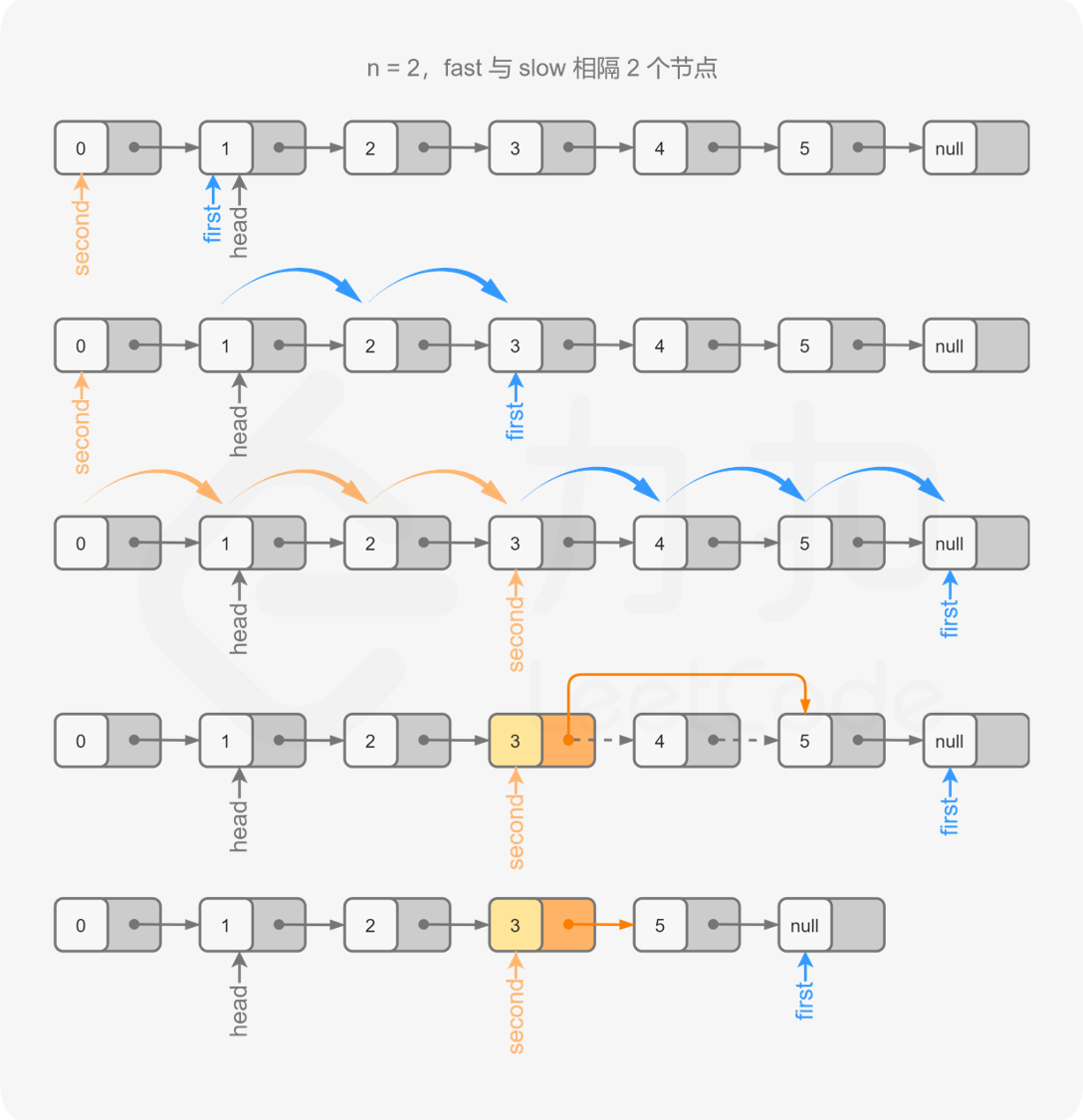
//C++ class Solution { public: ListNode* removeNthFromEnd(ListNode* head, int n) { ListNode* dummy = new ListNode(0, head); ListNode* first = head; ListNode* second = dummy; for (int i = 0; i < n; ++i) { first = first->next; } while (first) { first = first->next; second = second->next; } second->next = second->next->next; ListNode* ans = dummy->next; delete dummy; return ans; } };
1 2 3 4 5 6 7 8 9 10 11 12 13 14 15 16 17 18
//Java
class Solution {
    public ListNode removeNthFromEnd(ListNode head, int n) {
        ListNode dummy = new ListNode(0, head);
        ListNode first = head;
        ListNode second = dummy;
        for (int i = 0; i < n; ++i) {
            first = first.next;
        }
        while (first != null) {
            first = first.next;
            second = second.next;
        }
        second.next = second.next.next;
        ListNode ans = dummy.next;
        return ans;
    }
}