排序链表
1.题目内容
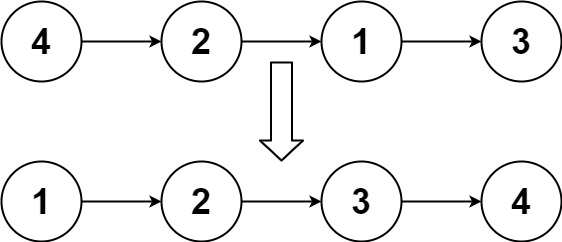
给你链表的头结点 head ,请将其按 升序 排列并返回 排序后的链表 。
示例 1:
1
2
| 输入:head = [4,2,1,3]
输出:[1,2,3,4]
|
示例 2:

1
2
| 输入:head = [-1,5,3,4,0]
输出:[-1,0,3,4,5]
|
示例 3:
提示:
- 链表中节点的数目在范围
[0, 5 * 104] 内
-105 <= Node.val <= 105
2.解法
(1)自顶向下的归并排序
思路及算法
对链表自顶向下归并排序的过程如下。
找到链表的中点,以中点为分界,将链表拆分成两个子链表。寻找链表的中点可以使用快慢指针的做法,快指针每次移动 2 步,慢指针每次移动 1 步,当快指针到达链表末尾时,慢指针指向的链表节点即为链表的中点。
对两个子链表分别排序。
将两个排序后的子链表合并,得到完整的排序后的链表。
上述过程可以通过递归实现。递归的终止条件是链表的节点个数小于或等于 1,即当链表为空或者链表只包含 1 个节点时,不需要对链表进行拆分和排序。
代码
1
2
3
4
5
6
7
8
9
10
11
12
13
14
15
16
17
18
19
20
21
22
23
24
25
26
27
28
29
30
31
32
33
34
35
36
37
38
39
40
41
42
43
44
45
46
47
48
49
50
| //Java
class Solution {
public ListNode sortList(ListNode head) {
return sortList(head, null);
}
public ListNode sortList(ListNode head, ListNode tail) {
if (head == null) {
return head;
}
if (head.next == tail) {
head.next = null;
return head;
}
ListNode slow = head, fast = head;
while (fast != tail) {
slow = slow.next;
fast = fast.next;
if (fast != tail) {
fast = fast.next;
}
}
ListNode mid = slow;
ListNode list1 = sortList(head, mid);
ListNode list2 = sortList(mid, tail);
ListNode sorted = merge(list1, list2);
return sorted;
}
public ListNode merge(ListNode head1, ListNode head2) {
ListNode dummyHead = new ListNode(0);
ListNode temp = dummyHead, temp1 = head1, temp2 = head2;
while (temp1 != null && temp2 != null) {
if (temp1.val <= temp2.val) {
temp.next = temp1;
temp1 = temp1.next;
} else {
temp.next = temp2;
temp2 = temp2.next;
}
temp = temp.next;
}
if (temp1 != null) {
temp.next = temp1;
} else if (temp2 != null) {
temp.next = temp2;
}
return dummyHead.next;
}
}
|
1
2
3
4
5
6
7
8
9
10
11
12
13
14
15
16
17
18
19
20
21
22
23
24
25
26
27
28
29
30
31
32
33
34
35
36
37
38
39
40
41
42
43
44
45
46
47
48
| //C++
class Solution {
public:
ListNode* sortList(ListNode* head) {
return sortList(head, nullptr);
}
ListNode* sortList(ListNode* head, ListNode* tail) {
if (head == nullptr) {
return head;
}
if (head->next == tail) {
head->next = nullptr;
return head;
}
ListNode* slow = head, *fast = head;
while (fast != tail) {
slow = slow->next;
fast = fast->next;
if (fast != tail) {
fast = fast->next;
}
}
ListNode* mid = slow;
return merge(sortList(head, mid), sortList(mid, tail));
}
ListNode* merge(ListNode* head1, ListNode* head2) {
ListNode* dummyHead = new ListNode(0);
ListNode* temp = dummyHead, *temp1 = head1, *temp2 = head2;
while (temp1 != nullptr && temp2 != nullptr) {
if (temp1->val <= temp2->val) {
temp->next = temp1;
temp1 = temp1->next;
} else {
temp->next = temp2;
temp2 = temp2->next;
}
temp = temp->next;
}
if (temp1 != nullptr) {
temp->next = temp1;
} else if (temp2 != nullptr) {
temp->next = temp2;
}
return dummyHead->next;
}
};
|
复杂度分析
(2)自底向上的归并排序
思路及算法
首先求得链表的长度 length,然后将链表拆分成子链表进行合并。
具体做法如下。
用 subLength 表示每次需要排序的子链表的长度,初始时 subLength=1。
每次将链表拆分成若干个长度为 subLength 的子链表(最后一个子链表的长度可以小于 subLength),按照每两个子链表一组进行合并,合并后即可得到若干个长度为 subLength×2 的有序子链表(最后一个子链表的长度可以小于 subLength×2)。
将 subLength 的值加倍,重复第 2 步,对更长的有序子链表进行合并操作,直到有序子链表的长度大于或等于 length,整个链表排序完毕。
如何保证每次合并之后得到的子链表都是有序的呢?可以通过数学归纳法证明。
初始时 subLength=1,每个长度为 1 的子链表都是有序的。
如果每个长度为 subLength 的子链表已经有序,合并两个长度为 subLength 的有序子链表,得到长度为 subLength×2 的子链表,一定也是有序的。
当最后一个子链表的长度小于 subLength 时,该子链表也是有序的,合并两个有序子链表之后得到的子链表一定也是有序的。
因此可以保证最后得到的链表是有序的。
代码
1
2
3
4
5
6
7
8
9
10
11
12
13
14
15
16
17
18
19
20
21
22
23
24
25
26
27
28
29
30
31
32
33
34
35
36
37
38
39
40
41
42
43
44
45
46
47
48
49
50
51
52
53
54
55
56
57
58
59
60
61
62
63
| //Java
class Solution {
public ListNode sortList(ListNode head) {
if (head == null) {
return head;
}
int length = 0;
ListNode node = head;
while (node != null) {
length++;
node = node.next;
}
ListNode dummyHead = new ListNode(0, head);
for (int subLength = 1; subLength < length; subLength <<= 1) {
ListNode prev = dummyHead, curr = dummyHead.next;
while (curr != null) {
ListNode head1 = curr;
for (int i = 1; i < subLength && curr.next != null; i++) {
curr = curr.next;
}
ListNode head2 = curr.next;
curr.next = null;
curr = head2;
for (int i = 1; i < subLength && curr != null && curr.next != null; i++) {
curr = curr.next;
}
ListNode next = null;
if (curr != null) {
next = curr.next;
curr.next = null;
}
ListNode merged = merge(head1, head2);
prev.next = merged;
while (prev.next != null) {
prev = prev.next;
}
curr = next;
}
}
return dummyHead.next;
}
public ListNode merge(ListNode head1, ListNode head2) {
ListNode dummyHead = new ListNode(0);
ListNode temp = dummyHead, temp1 = head1, temp2 = head2;
while (temp1 != null && temp2 != null) {
if (temp1.val <= temp2.val) {
temp.next = temp1;
temp1 = temp1.next;
} else {
temp.next = temp2;
temp2 = temp2.next;
}
temp = temp.next;
}
if (temp1 != null) {
temp.next = temp1;
} else if (temp2 != null) {
temp.next = temp2;
}
return dummyHead.next;
}
}
|
1
2
3
4
5
6
7
8
9
10
11
12
13
14
15
16
17
18
19
20
21
22
23
24
25
26
27
28
29
30
31
32
33
34
35
36
37
38
39
40
41
42
43
44
45
46
47
48
49
50
51
52
53
54
55
56
57
58
59
60
61
62
63
64
| //C++
class Solution {
public:
ListNode* sortList(ListNode* head) {
if (head == nullptr) {
return head;
}
int length = 0;
ListNode* node = head;
while (node != nullptr) {
length++;
node = node->next;
}
ListNode* dummyHead = new ListNode(0, head);
for (int subLength = 1; subLength < length; subLength <<= 1) {
ListNode* prev = dummyHead, *curr = dummyHead->next;
while (curr != nullptr) {
ListNode* head1 = curr;
for (int i = 1; i < subLength && curr->next != nullptr; i++) {
curr = curr->next;
}
ListNode* head2 = curr->next;
curr->next = nullptr;
curr = head2;
for (int i = 1; i < subLength && curr != nullptr && curr->next != nullptr; i++) {
curr = curr->next;
}
ListNode* next = nullptr;
if (curr != nullptr) {
next = curr->next;
curr->next = nullptr;
}
ListNode* merged = merge(head1, head2);
prev->next = merged;
while (prev->next != nullptr) {
prev = prev->next;
}
curr = next;
}
}
return dummyHead->next;
}
ListNode* merge(ListNode* head1, ListNode* head2) {
ListNode* dummyHead = new ListNode(0);
ListNode* temp = dummyHead, *temp1 = head1, *temp2 = head2;
while (temp1 != nullptr && temp2 != nullptr) {
if (temp1->val <= temp2->val) {
temp->next = temp1;
temp1 = temp1->next;
} else {
temp->next = temp2;
temp2 = temp2->next;
}
temp = temp->next;
}
if (temp1 != nullptr) {
temp->next = temp1;
} else if (temp2 != nullptr) {
temp->next = temp2;
}
return dummyHead->next;
}
};
|
复杂度分析
- 时间复杂度:O(nlogn),其中 n 是链表的长度。
- 空间复杂度:O(1)。