二叉树的右视图 1.题目内容 给定一个二叉树的 根节点 root,想象自己站在它的右侧,按照从顶部到底部的顺序,返回从右侧所能看到的节点值。
示例 1:
1
2
输入: [1,2,3,null,5,null,4] 输出: [1,3,4]
示例 2:
1
2
输入: [1,null,3] 输出: [1,3]
示例 3:
提示:
二叉树的节点个数的范围是 [0,100]
-100 <= Node.val <= 100
2.解法 (1)深度优先搜索 思路及算法
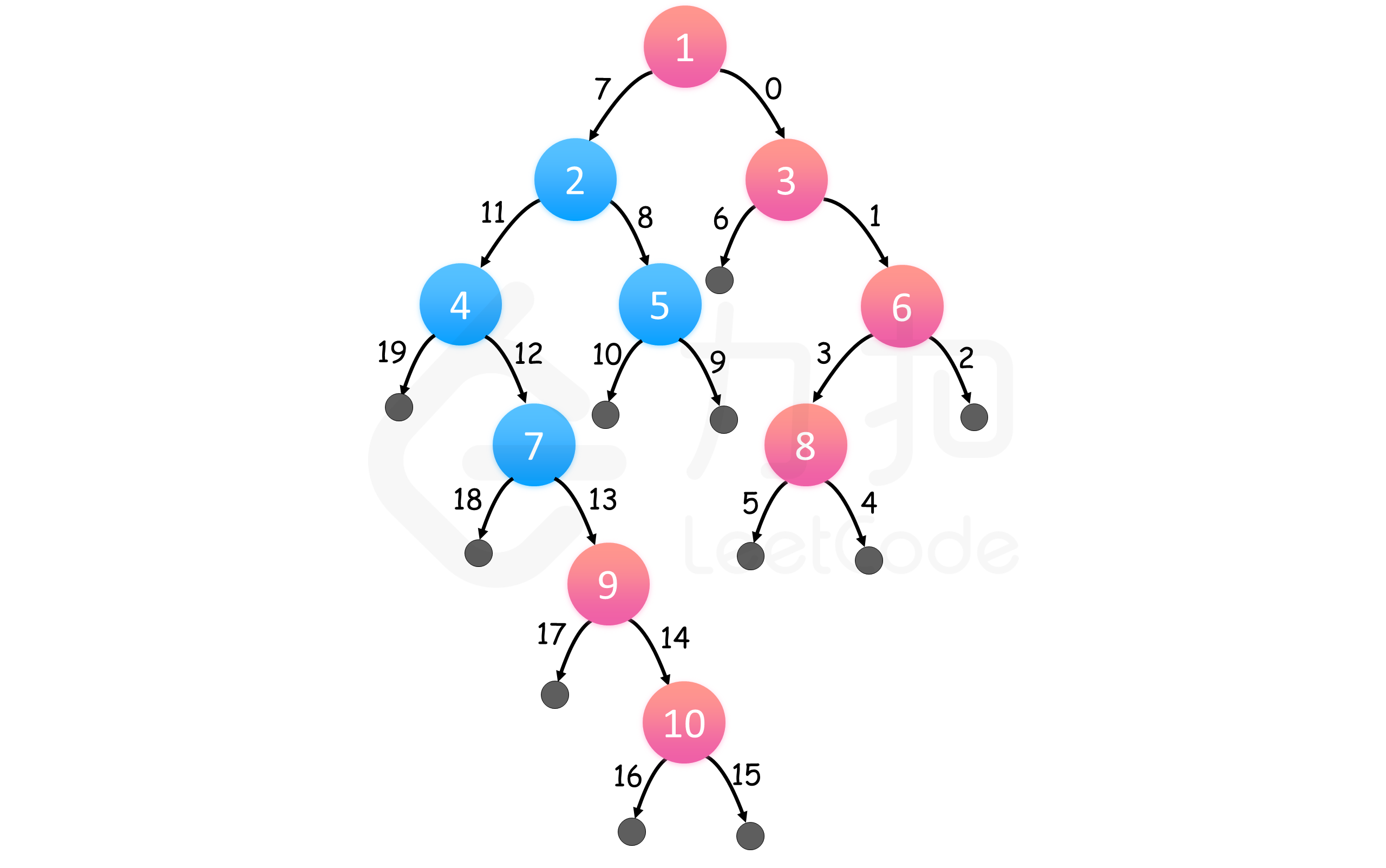
我们对树进行深度优先搜索,在搜索过程中,我们总是先访问右子树。那么对于每一层来说,我们在这层见到的第一个结点一定是最右边的结点。这样一来,我们可以存储在每个深度访问的第一个结点,一旦我们知道了树的层数,就可以得到最终的结果数组。
代码
1 2 3 4 5 6 7 8 9 10 11 12 13 14 15 16 17 18 19 20 21 22 23 24 25 26 27 28 29 30 31 32 33 34 35 36 37 38 39 //Java class Solution { public List<Integer> rightSideView(TreeNode root) { Map<Integer, Integer> rightmostValueAtDepth = new HashMap<Integer, Integer>(); int max_depth = -1; Deque<TreeNode> nodeStack = new LinkedList<TreeNode>(); Deque<Integer> depthStack = new LinkedList<Integer>(); nodeStack.push(root); depthStack.push(0); while (!nodeStack.isEmpty()) { TreeNode node = nodeStack.pop(); int depth = depthStack.pop(); if (node != null) { // 维护二叉树的最大深度 max_depth = Math.max(max_depth, depth); // 如果不存在对应深度的节点我们才插入 if (!rightmostValueAtDepth.containsKey(depth)) { rightmostValueAtDepth.put(depth, node.val); } nodeStack.push(node.left); nodeStack.push(node.right); depthStack.push(depth + 1); depthStack.push(depth + 1); } } List<Integer> rightView = new ArrayList<Integer>(); for (int depth = 0; depth <= max_depth; depth++) { rightView.add(rightmostValueAtDepth.get(depth)); } return rightView; } }
1 2 3 4 5 6 7 8 9 10 11 12 13 14 15 16 17 18 19 20 21 22 23 24 25 26 27 28 29 30 31 32 33 34 35 36 37 38 39 40 //C++ class Solution { public: vector<int> rightSideView(TreeNode* root) { unordered_map<int, int> rightmostValueAtDepth; int max_depth = -1; stack<TreeNode*> nodeStack; stack<int> depthStack; nodeStack.push(root); depthStack.push(0); while (!nodeStack.empty()) { TreeNode* node = nodeStack.top();nodeStack.pop(); int depth = depthStack.top();depthStack.pop(); if (node != NULL) { // 维护二叉树的最大深度 max_depth = max(max_depth, depth); // 如果不存在对应深度的节点我们才插入 if (rightmostValueAtDepth.find(depth) == rightmostValueAtDepth.end()) { rightmostValueAtDepth[depth] = node -> val; } nodeStack.push(node -> left); nodeStack.push(node -> right); depthStack.push(depth + 1); depthStack.push(depth + 1); } } vector<int> rightView; for (int depth = 0; depth <= max_depth; ++depth) { rightView.push_back(rightmostValueAtDepth[depth]); } return rightView; } };
复杂度分析
(2)广度优先搜索 思路及算法
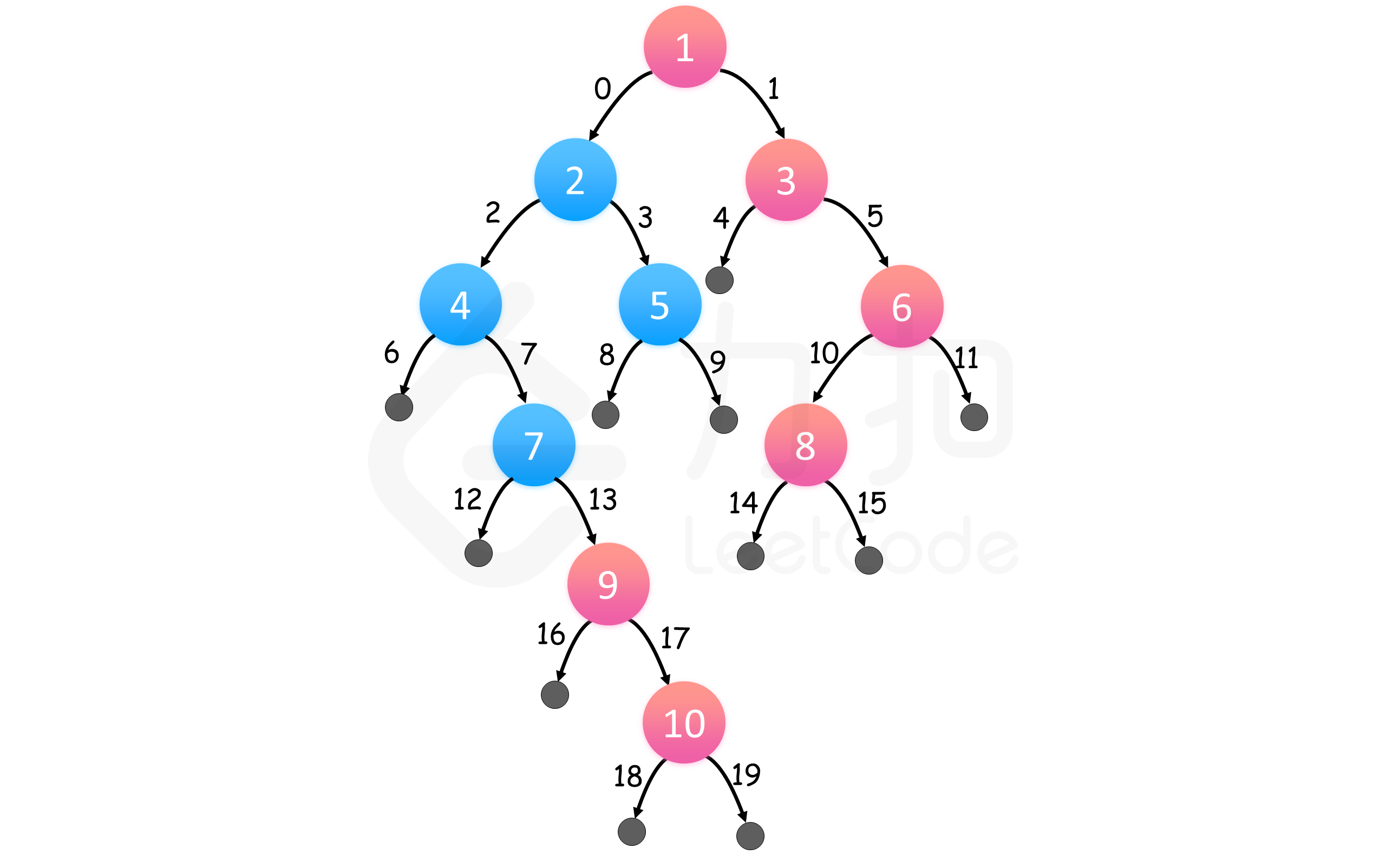
我们可以对二叉树进行层次遍历,那么对于每层来说,最右边的结点一定是最后被遍历到的。二叉树的层次遍历可以用广度优先搜索实现。执行广度优先搜索,左结点排在右结点之前,这样,我们对每一层都从左到右访问。因此,只保留每个深度最后访问的结点,我们就可以在遍历完整棵树后得到每个深度最右的结点。除了将栈改成队列,并去除了 rightmost_value_at_depth 之前的检查外,算法没有别的改动。
代码
1
2
3
4
5
6
7
8
9
10
11
12
13
14
15
16
17
18
19
20
21
22
23
24
25
26
27
28
29
30
31
32
33
34
35
36
37
//Java class Solution { public List<Integer> rightSideView(TreeNode root) { Map<Integer, Integer> rightmostValueAtDepth = new HashMap<Integer, Integer>(); int max_depth = -1; Queue<TreeNode> nodeQueue = new LinkedList<TreeNode>(); Queue<Integer> depthQueue = new LinkedList<Integer>(); nodeQueue.add(root); depthQueue.add(0); while (!nodeQueue.isEmpty()) { TreeNode node = nodeQueue.remove(); int depth = depthQueue.remove(); if (node != null) { // 维护二叉树的最大深度 max_depth = Math.max(max_depth, depth); // 由于每一层最后一个访问到的节点才是我们要的答案,因此不断更新对应深度的信息即可 rightmostValueAtDepth.put(depth, node.val); nodeQueue.add(node.left); nodeQueue.add(node.right); depthQueue.add(depth + 1); depthQueue.add(depth + 1); } } List<Integer> rightView = new ArrayList<Integer>(); for (int depth = 0; depth <= max_depth; depth++) { rightView.add(rightmostValueAtDepth.get(depth)); } return rightView; } }
1
2
3
4
5
6
7
8
9
10
11
12
13
14
15
16
17
18
19
20
21
22
23
24
25
26
27
28
29
30
31
32
33
34
35
36
37
38
//C++ class Solution { public: vector<int> rightSideView(TreeNode* root) { unordered_map<int, int> rightmostValueAtDepth; int max_depth = -1; queue<TreeNode*> nodeQueue; queue<int> depthQueue; nodeQueue.push(root); depthQueue.push(0); while (!nodeQueue.empty()) { TreeNode* node = nodeQueue.front();nodeQueue.pop(); int depth = depthQueue.front();depthQueue.pop(); if (node != NULL) { // 维护二叉树的最大深度 max_depth = max(max_depth, depth); // 由于每一层最后一个访问到的节点才是我们要的答案,因此不断更新对应深度的信息即可 rightmostValueAtDepth[depth] = node -> val; nodeQueue.push(node -> left); nodeQueue.push(node -> right); depthQueue.push(depth + 1); depthQueue.push(depth + 1); } } vector<int> rightView; for (int depth = 0; depth <= max_depth; ++depth) { rightView.push_back(rightmostValueAtDepth[depth]); } return rightView; } };
复杂度分析