旋转链表

旋转链表

1.题目内容

给你一个链表的头节点 head ,旋转链表,将链表每个节点向右移动 k 个位置。

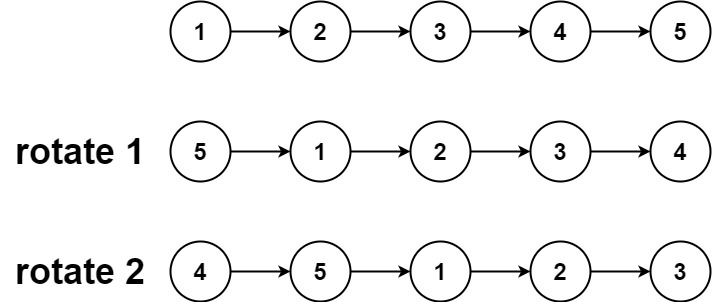
示例 1:

img

1
2
输入:head = [1,2,3,4,5], k = 2
输出:[4,5,1,2,3]

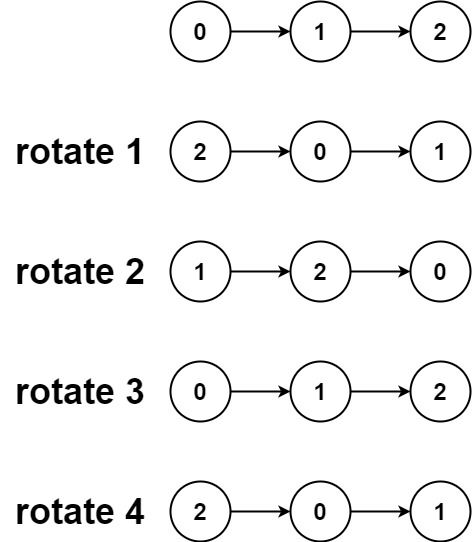
示例 2:

img

1
2
输入:head = [0,1,2], k = 4
输出:[2,0,1]

提示:

  • 链表中节点的数目在范围 [0, 500]
  • -100 <= Node.val <= 100
  • 0 <= k <= 2 * 109

2.解法

闭合为环

思路及算法

记给定链表的长度为 n,注意到当向右移动的次数 k≥n 时,我们仅需要向右移动 k mod n 次即可。因为每 n 次移动都会让链表变为原状。这样我们可以知道,新链表的最后一个节点为原链表的第 (n−1)−(k mod n) 个节点(从 0 开始计数)。

这样,我们可以先将给定的链表连接成环,然后将指定位置断开。

具体代码中,我们首先计算出链表的长度 n,并找到该链表的末尾节点,将其与头节点相连。这样就得到了闭合为环的链表。然后我们找到新链表的最后一个节点(即原链表的第 (n−1)−(k mod n) 个节点),将当前闭合为环的链表断开,即可得到我们所需要的结果。

特别地,当链表长度不大于 1,或者 k 为 n 的倍数时,新链表将与原链表相同,我们无需进行任何处理。

代码

1
2
3
4
5
6
7
8
9
10
11
12
13
14
15
16
17
18
19
20
21
22
23
24
25
26
//C++
class Solution {
public:
ListNode* rotateRight(ListNode* head, int k) {
if (k == 0 || head == nullptr || head->next == nullptr) {
return head;
}
int n = 1;
ListNode* iter = head;
while (iter->next != nullptr) {
iter = iter->next;
n++;
}
int add = n - k % n;
if (add == n) {
return head;
}
iter->next = head;
while (add--) {
iter = iter->next;
}
ListNode* ret = iter->next;
iter->next = nullptr;
return ret;
}
};
1
2
3
4
5
6
7
8
9
10
11
12
13
14
15
16
17
18
19
20
21
22
23
24
25
//Java
class Solution {
public ListNode rotateRight(ListNode head, int k) {
if (k == 0 || head == null || head.next == null) {
return head;
}
int n = 1;
ListNode iter = head;
while (iter.next != null) {
iter = iter.next;
n++;
}
int add = n - k % n;
if (add == n) {
return head;
}
iter.next = head;
while (add-- > 0) {
iter = iter.next;
}
ListNode ret = iter.next;
iter.next = null;
return ret;
}
}
复杂度分析

  • 时间复杂度:O(n),最坏情况下,我们需要遍历该链表两次。

  • 空间复杂度:O(1),我们只需要常数的空间存储若干变量。