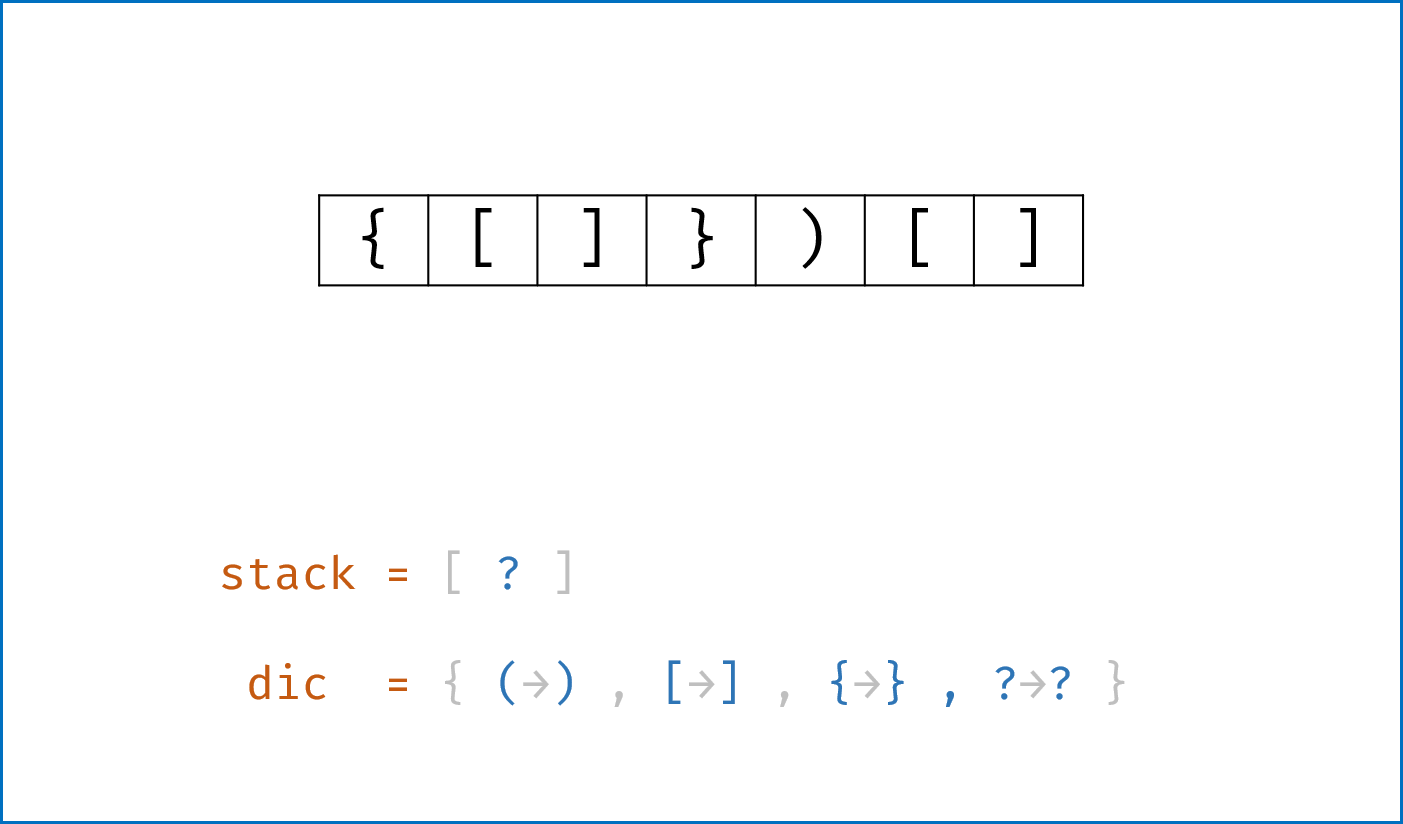
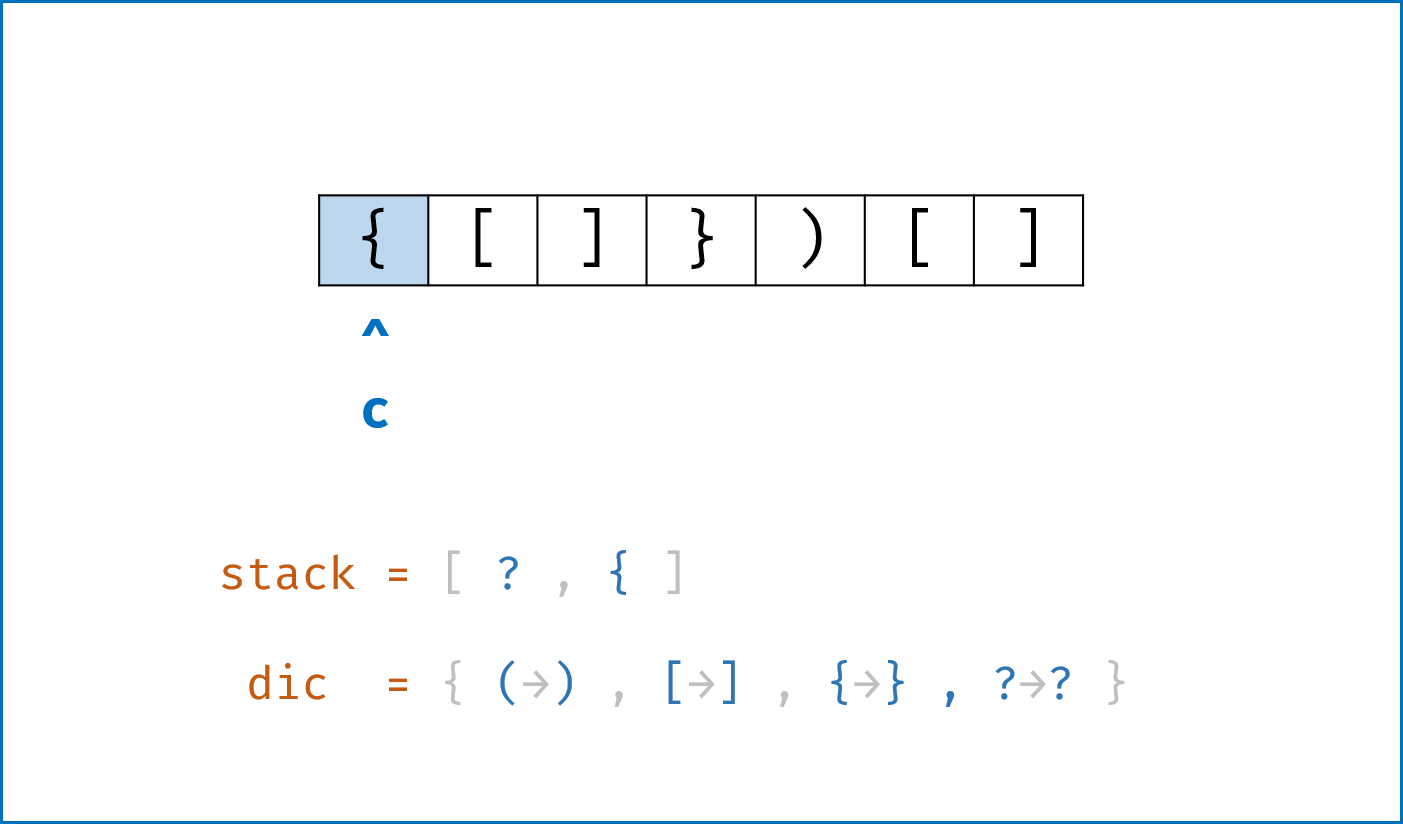
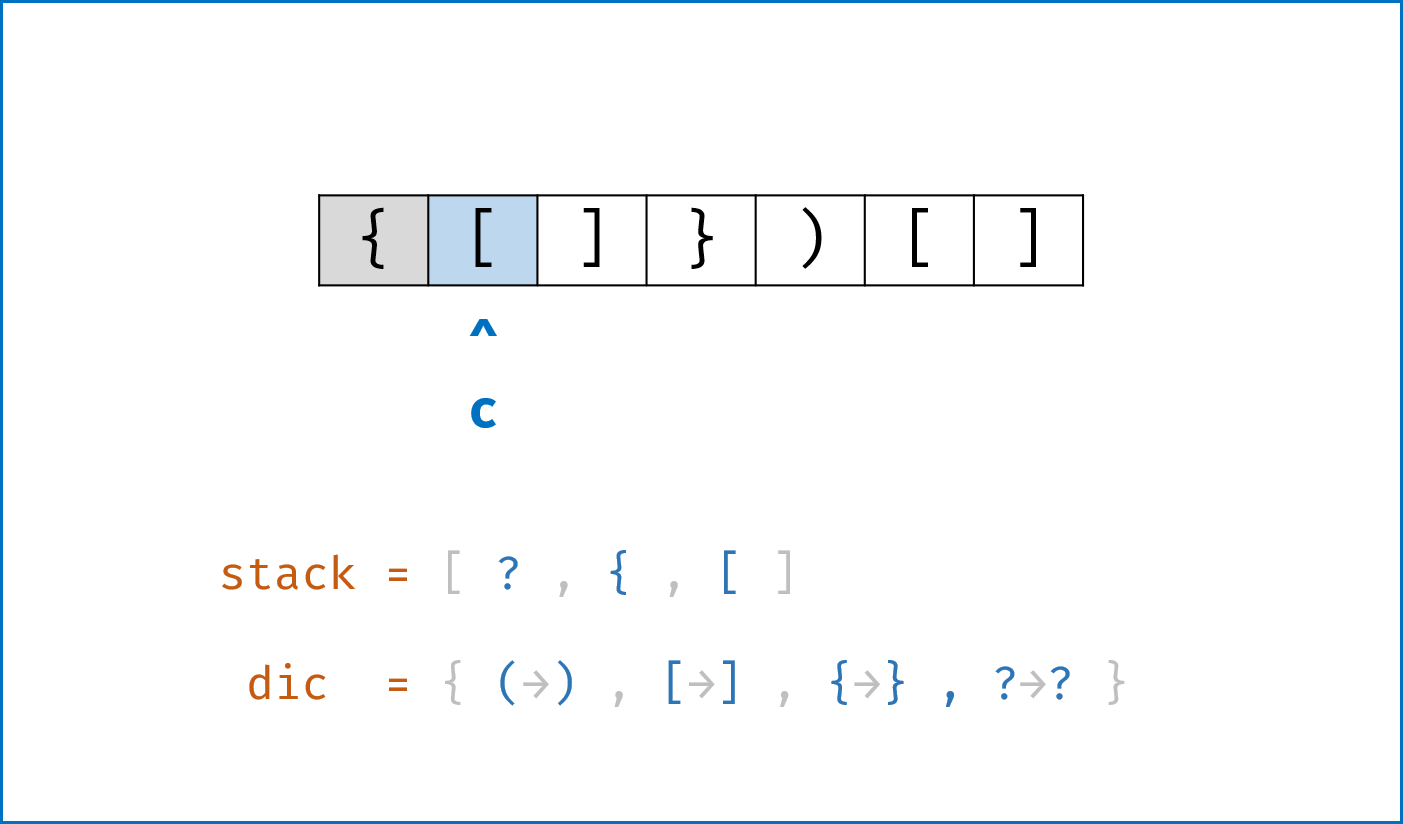
//Java class Solution { public String decodeString(String s) { StringBuilder res = new StringBuilder(); int multi = 0; LinkedList<Integer> stack_multi = new LinkedList<>(); LinkedList<String> stack_res = new LinkedList<>(); for(Character c : s.toCharArray()) { if(c == '[') { stack_multi.addLast(multi); stack_res.addLast(res.toString()); multi = 0; res = new StringBuilder(); } else if(c == ']') { StringBuilder tmp = new StringBuilder(); int cur_multi = stack_multi.removeLast(); for(int i = 0; i < cur_multi; i++) tmp.append(res); res = new StringBuilder(stack_res.removeLast() + tmp); } else if(c >= '0' && c <= '9') multi = multi * 10 + Integer.parseInt(c + ""); else res.append(c); } return res.toString(); } }
复杂度分析
时间复杂度 O(N),一次遍历 s;
空间复杂度 O(N),辅助栈在极端情况下需要线性空间,例如 2[2[2[a]]]。
(2)递归
思路及算法
总体思路与辅助栈法一致,不同点在于将 [ 和 ] 分别作为递归的开启与终止条件:
当 s[i] == ']' 时,返回当前括号内记录的 res 字符串与 ] 的索引 i (更新上层递归指针位置);
当 s[i] == '[' 时,开启新一层递归,记录此 [...] 内字符串 tmp 和递归后的最新索引 i,并执行 res + multi * tmp 拼接字符串。
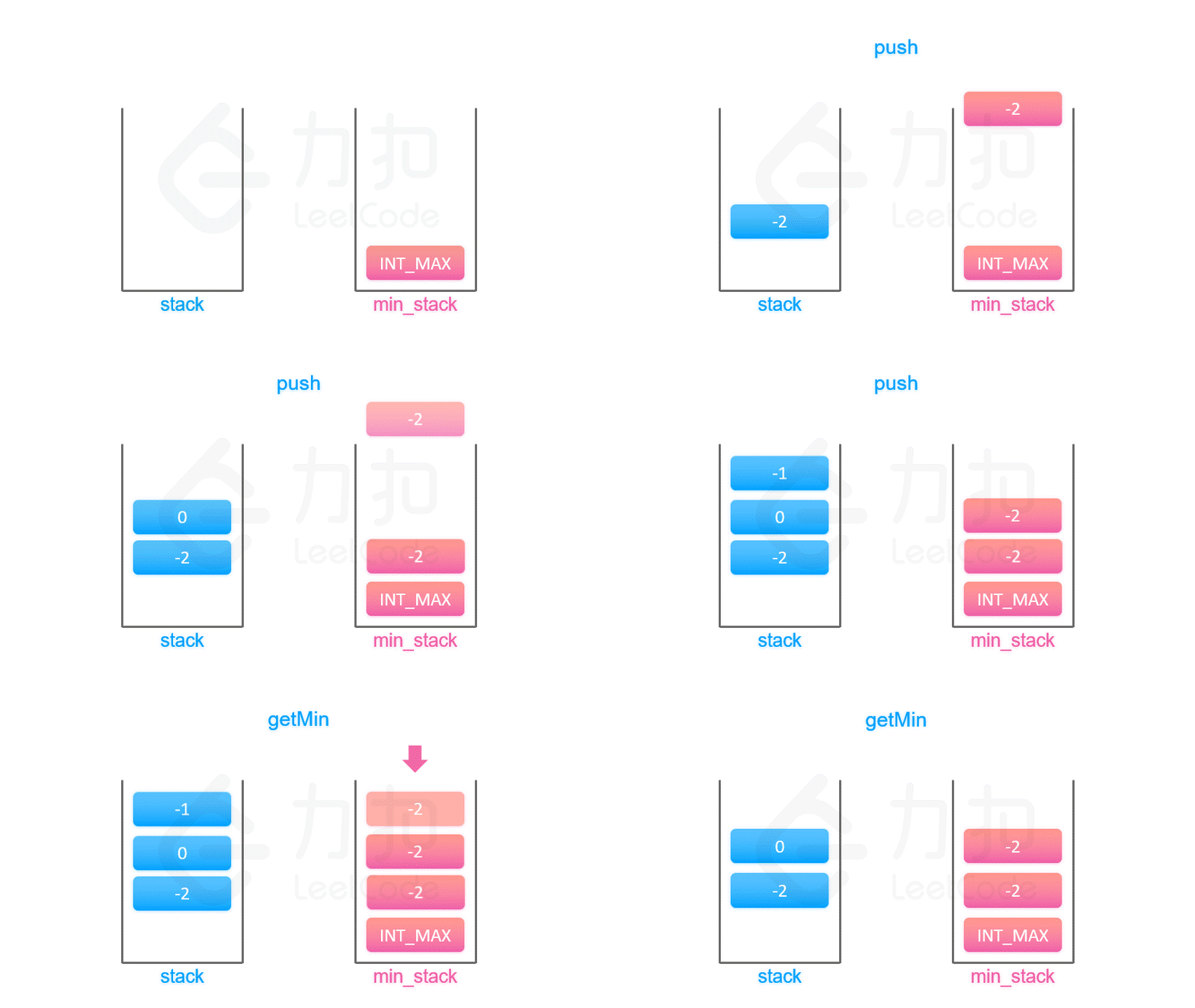
//Java class MinStack { Deque<Integer> xStack; Deque<Integer> minStack;
public MinStack() { xStack = new LinkedList<Integer>(); minStack = new LinkedList<Integer>(); minStack.push(Integer.MAX_VALUE); } public void push(int x) { xStack.push(x); minStack.push(Math.min(minStack.peek(), x)); } public void pop() { xStack.pop(); minStack.pop(); } public int top() { return xStack.peek(); } public int getMin() { return minStack.peek(); } }
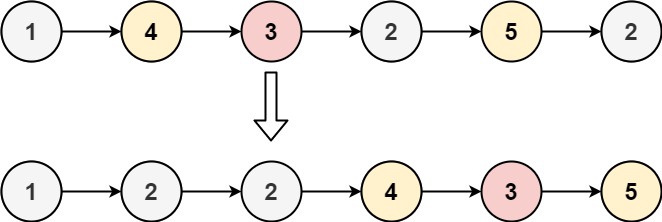
给你一个链表的头节点 head 和一个特定值 x ,请你对链表进行分隔,使得所有 小于x 的节点都出现在 大于或等于x 的节点之前。
你应当 保留 两个分区中每个节点的初始相对位置。
示例 1:
1
2
输入:head = [1,4,3,2,5,2], x = 3 输出:[1,2,2,4,3,5]
示例 2:
1
2
输入:head = [2,1], x = 2 输出:[1,2]
提示:
链表中节点的数目在范围 [0, 200] 内
-100 <= Node.val <= 100
-200 <= x <= 200
2.解法
模拟
思路及算法
直观来说我们只需维护两个链表 small 和 large 即可,small 链表按顺序存储所有小于 x 的节点,large 链表按顺序存储所有大于等于 x 的节点。遍历完原链表后,我们只要将 small 链表尾节点指向 large 链表的头节点即能完成对链表的分隔。
为了实现上述思路,我们设 smallHead 和 largeHead 分别为两个链表的哑节点,即它们的 next 指针指向链表的头节点,这样做的目的是为了更方便地处理头节点为空的边界条件。同时设 small 和 large 节点指向当前链表的末尾节点。开始时 smallHead=small,largeHead=large。随后,从前往后遍历链表,判断当前链表的节点值是否小于 x,如果小于就将 small 的 next 指针指向该节点,否则将 large 的 next 指针指向该节点。
遍历结束后,我们将 large 的 next 指针置空,这是因为当前节点复用的是原链表的节点,而其 next 指针可能指向一个小于 x 的节点,我们需要切断这个引用。同时将 small 的 next 指针指向 largeHead 的 next 指针指向的节点,即真正意义上的 large链表的头节点。最后返回 smallHead的 next 指针即为我们要求的答案。
//Java class Solution { public ListNode rotateRight(ListNode head, int k) { if (k == 0 || head == null || head.next == null) { return head; } int n = 1; ListNode iter = head; while (iter.next != null) { iter = iter.next; n++; } int add = n - k % n; if (add == n) { return head; } iter.next = head; while (add-- > 0) { iter = iter.next; } ListNode ret = iter.next; iter.next = null; return ret; } }
while (cur != nullptr) { ListNode *next = cur->next; cur->next = pre; pre = cur; cur = next; } }
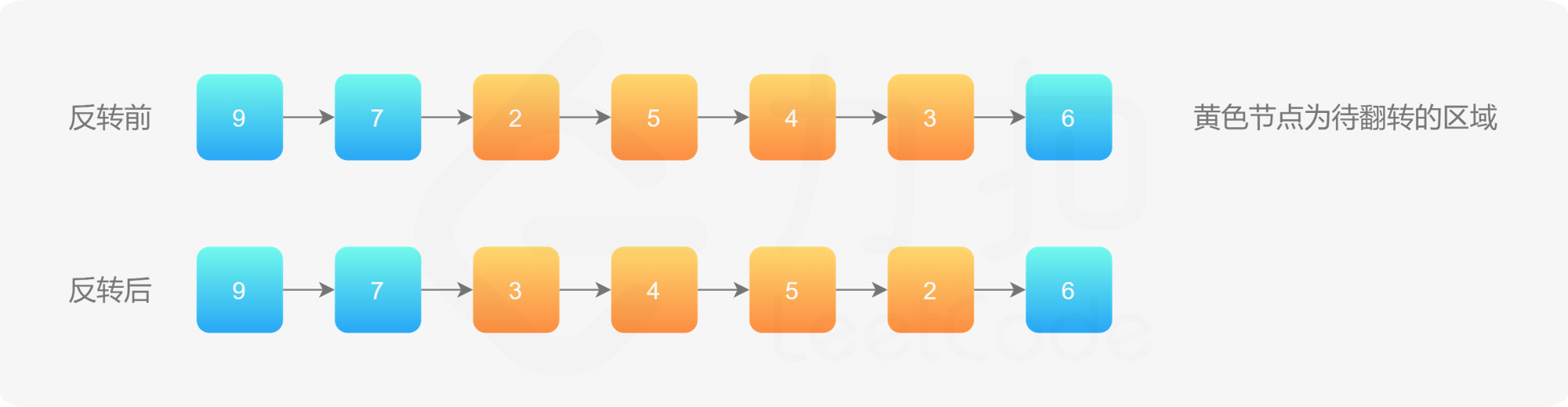
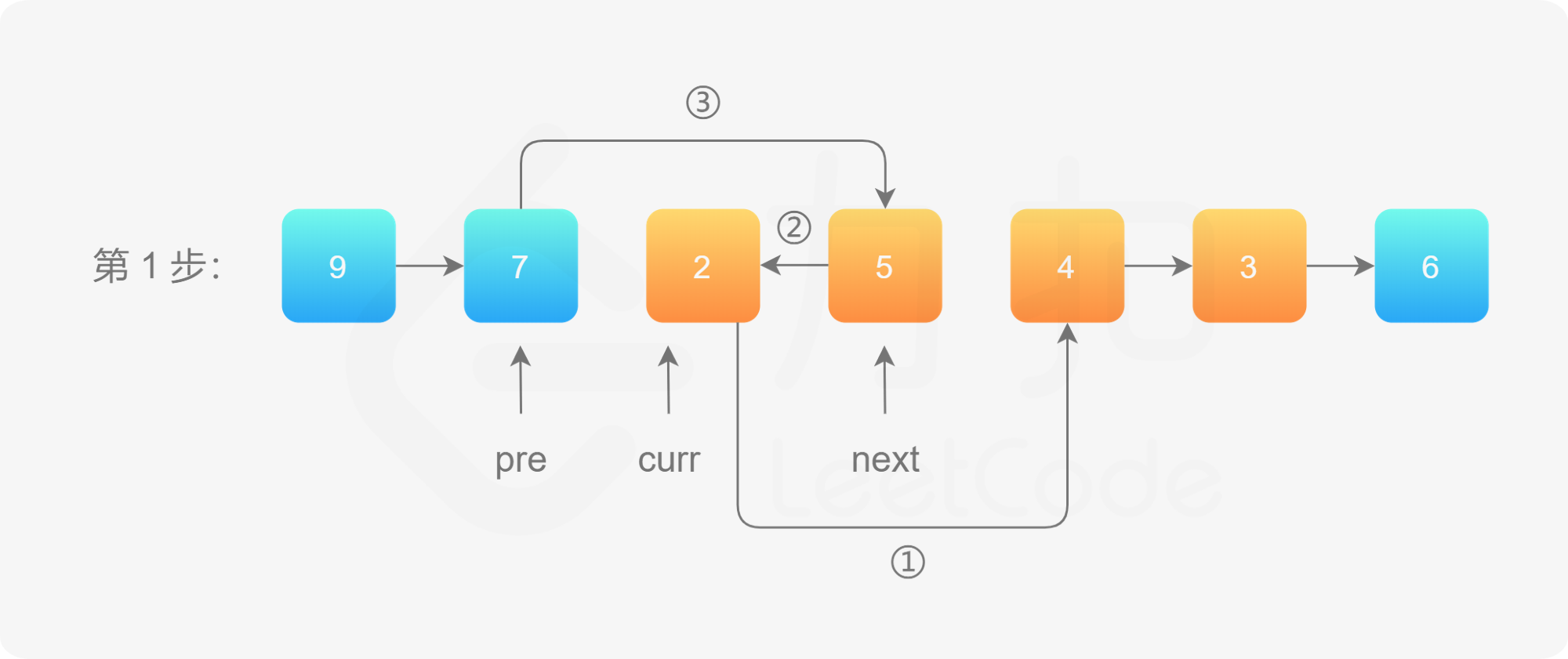
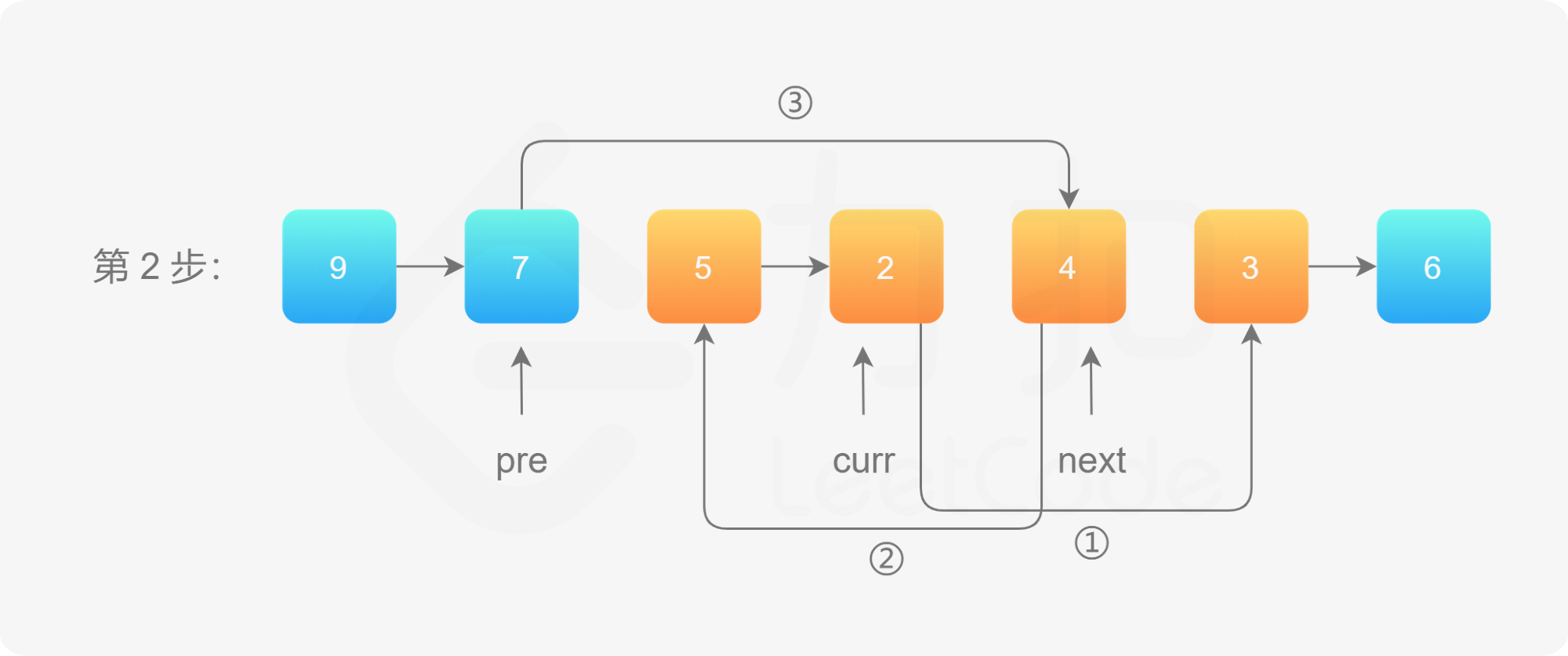
public: ListNode *reverseBetween(ListNode *head, int left, int right) { // 因为头节点有可能发生变化,使用虚拟头节点可以避免复杂的分类讨论 ListNode *dummyNode = new ListNode(-1); dummyNode->next = head;
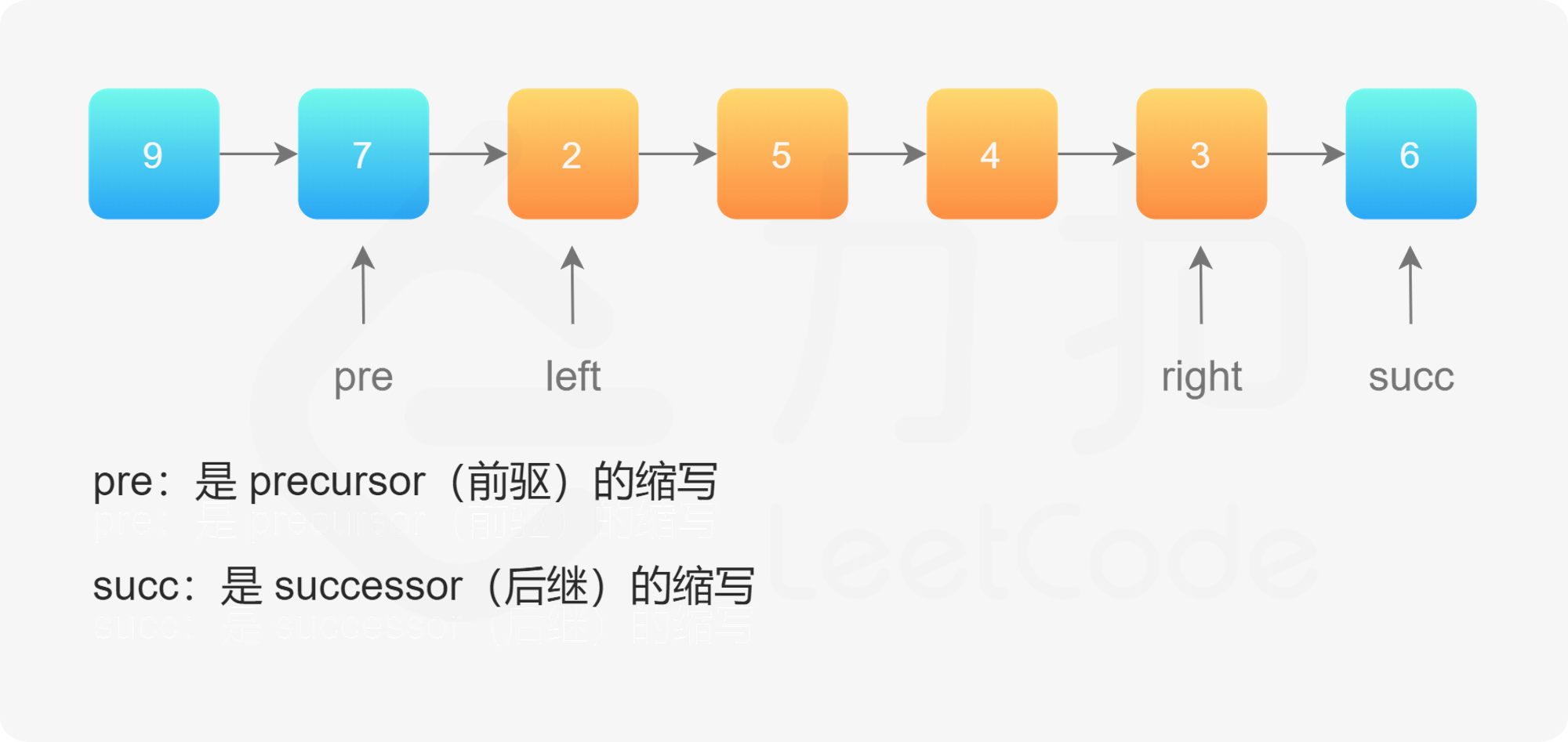
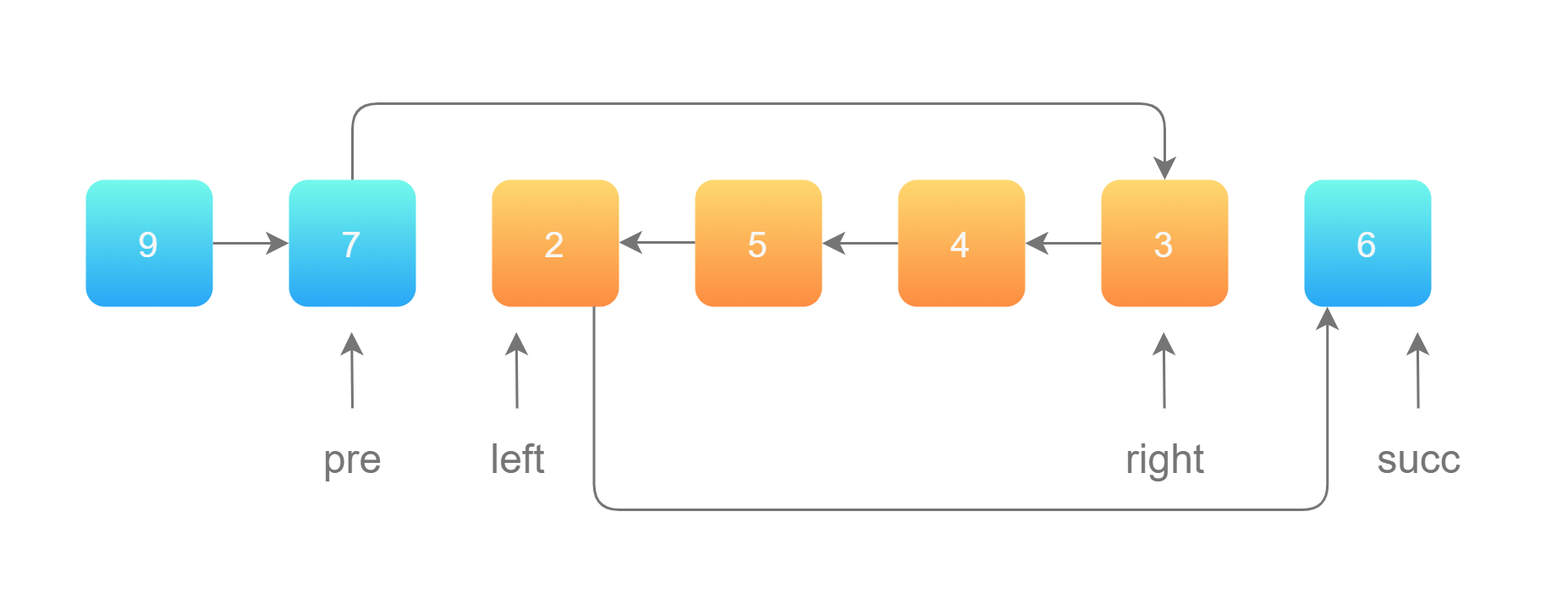
ListNode *pre = dummyNode; // 第 1 步:从虚拟头节点走 left - 1 步,来到 left 节点的前一个节点 // 建议写在 for 循环里,语义清晰 for (int i = 0; i < left - 1; i++) { pre = pre->next; }
// 第 2 步:从 pre 再走 right - left + 1 步,来到 right 节点 ListNode *rightNode = pre; for (int i = 0; i < right - left + 1; i++) { rightNode = rightNode->next; }
//Java class Solution { public ListNode reverseBetween(ListNode head, int left, int right) { // 因为头节点有可能发生变化,使用虚拟头节点可以避免复杂的分类讨论 ListNode dummyNode = new ListNode(-1); dummyNode.next = head;
ListNode pre = dummyNode; // 第 1 步:从虚拟头节点走 left - 1 步,来到 left 节点的前一个节点 // 建议写在 for 循环里,语义清晰 for (int i = 0; i < left - 1; i++) { pre = pre.next; }
// 第 2 步:从 pre 再走 right - left + 1 步,来到 right 节点 ListNode rightNode = pre; for (int i = 0; i < right - left + 1; i++) { rightNode = rightNode.next; }
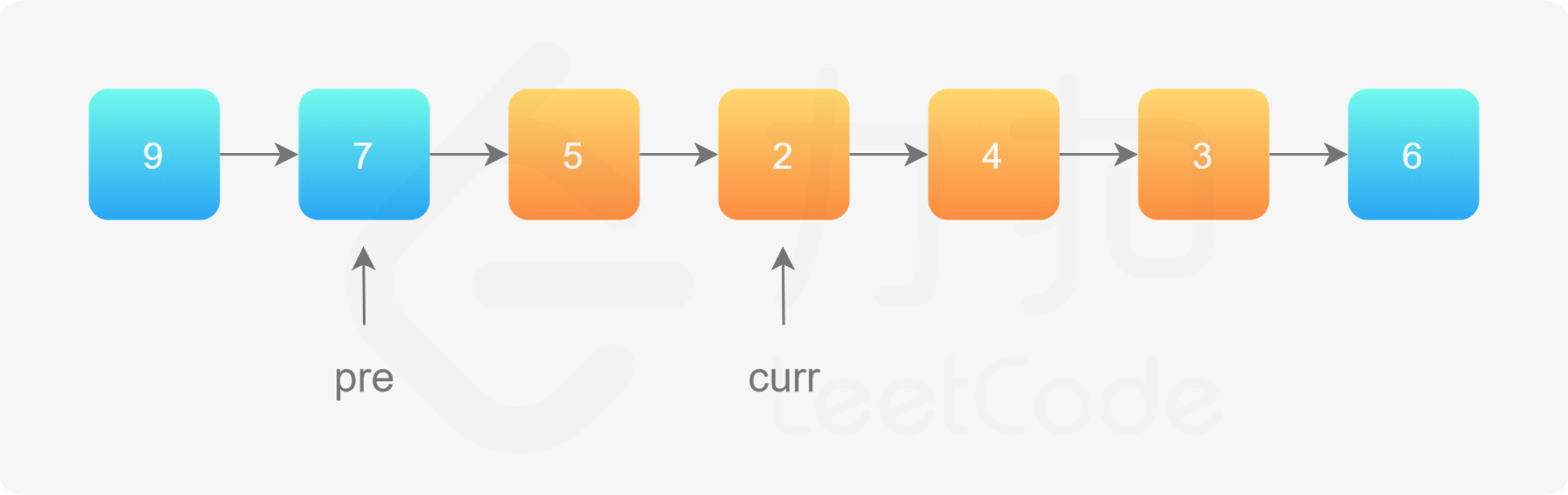
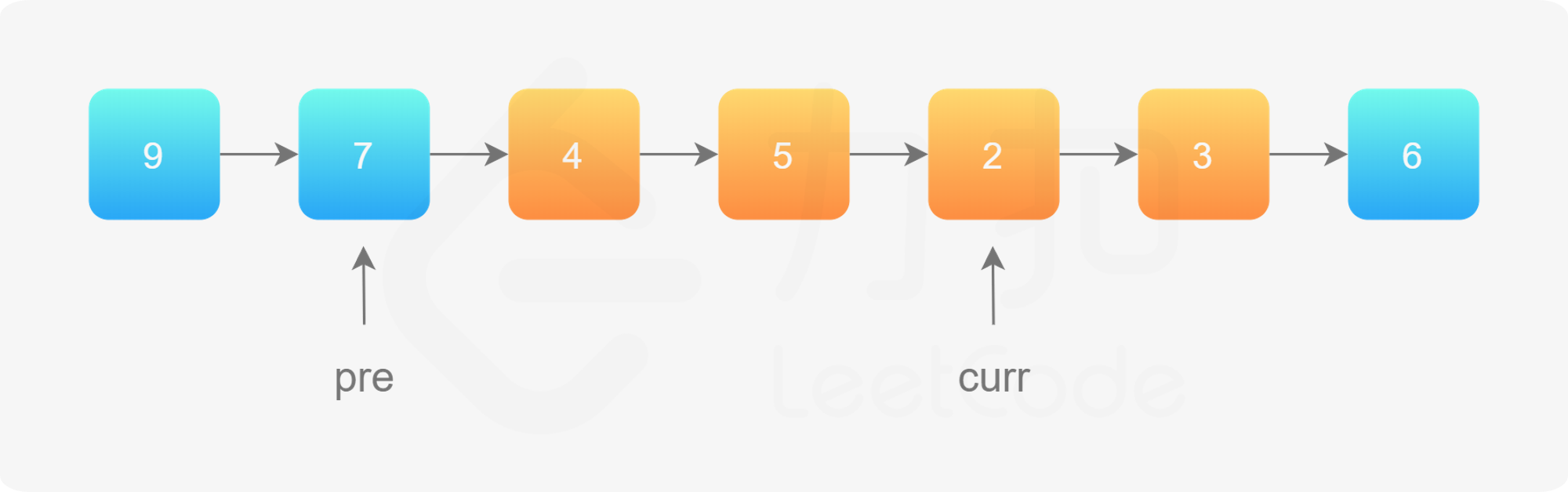
//Java class Solution { public ListNode reverseBetween(ListNode head, int left, int right) { // 设置 dummyNode 是这一类问题的一般做法 ListNode dummyNode = new ListNode(-1); dummyNode.next = head; ListNode pre = dummyNode; for (int i = 0; i < left - 1; i++) { pre = pre.next; } ListNode cur = pre.next; ListNode next; for (int i = 0; i < right - left; i++) { next = cur.next; cur.next = next.next; next.next = pre.next; pre.next = next; } return dummyNode.next; } }
//Java class Solution { public ListNode mergeKLists(ListNode[] lists) { ListNode ans = null; for (int i = 0; i < lists.length; ++i) { ans = mergeTwoLists(ans, lists[i]); } return ans; }
public ListNode mergeTwoLists(ListNode a, ListNode b) { if (a == null || b == null) { return a != null ? a : b; } ListNode head = new ListNode(0); ListNode tail = head, aPtr = a, bPtr = b; while (aPtr != null && bPtr != null) { if (aPtr.val < bPtr.val) { tail.next = aPtr; aPtr = aPtr.next; } else { tail.next = bPtr; bPtr = bPtr.next; } tail = tail.next; } tail.next = (aPtr != null ? aPtr : bPtr); return head.next; } }
复杂度分析
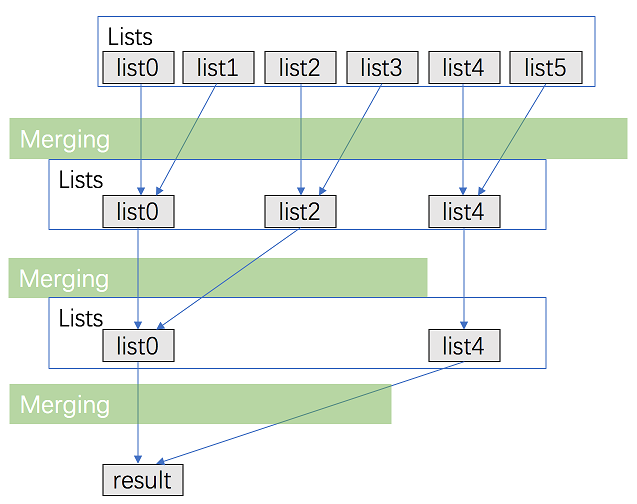
时间复杂度:假设每个链表的最长长度是 n。在第一次合并后,ans 的长度为 n;第二次合并后,ans 的长度为 2×n,第 i 次合并后,ans 的长度为 i×n。第 i 次合并的时间代价是 O(n+(i−1)×n)=O(i×n),那么总的时间代价为 O(k^2^n),故渐进时间复杂度为 O(k^2^ n)。
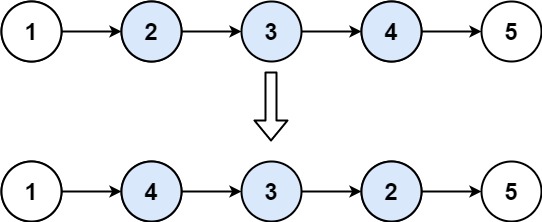
k 是一个正整数,它的值小于或等于链表的长度。如果节点总数不是 k 的整数倍,那么请将最后剩余的节点保持原有顺序。
你不能只是单纯的改变节点内部的值,而是需要实际进行节点交换。
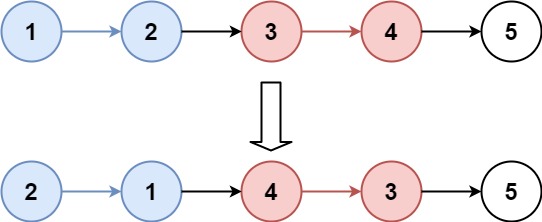
示例 1:
1
2
输入:head = [1,2,3,4,5], k = 2 输出:[2,1,4,3,5]
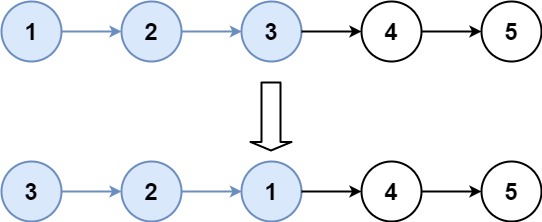
示例 2:
1
2
输入:head = [1,2,3,4,5], k = 3
输出:[3,2,1,4,5]
提示:
链表中的节点数目为 n
1 <= k <= n <= 5000
0 <= Node.val <= 1000
2.解法
思路及算法
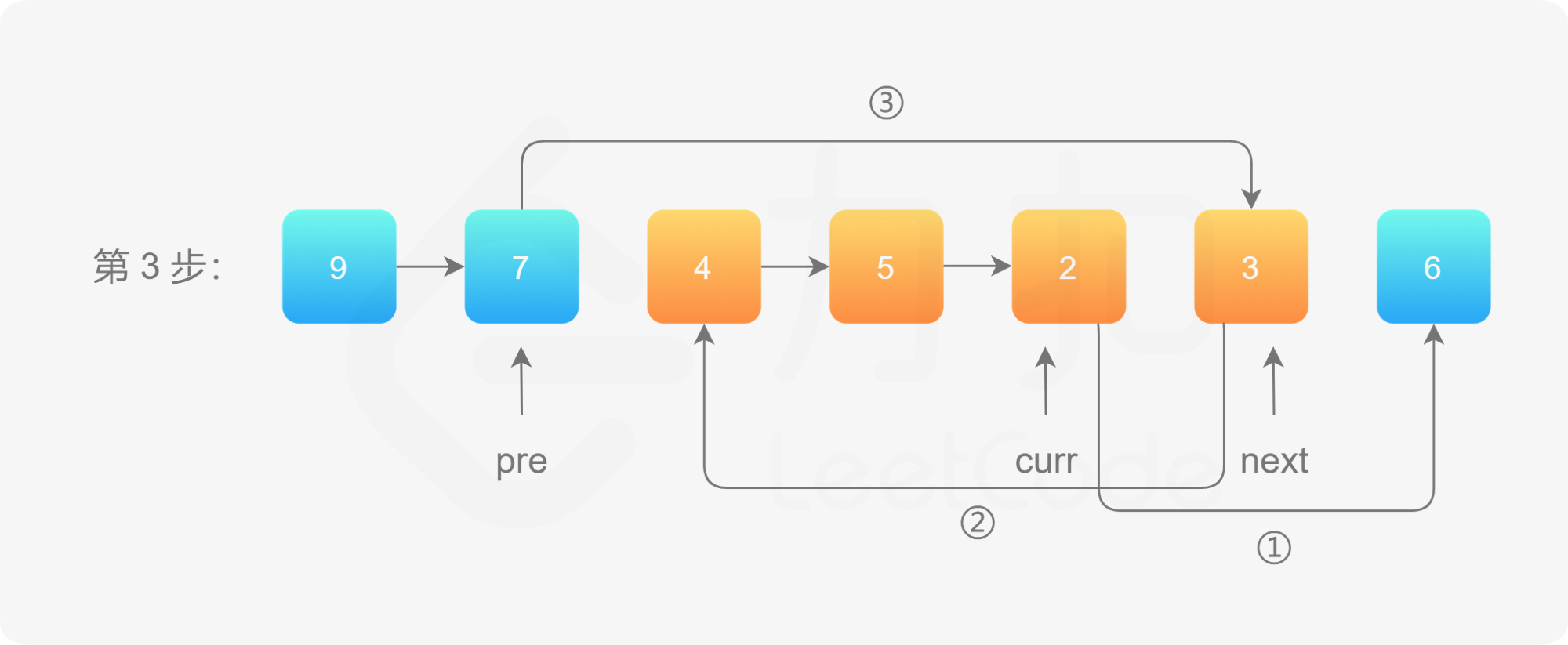
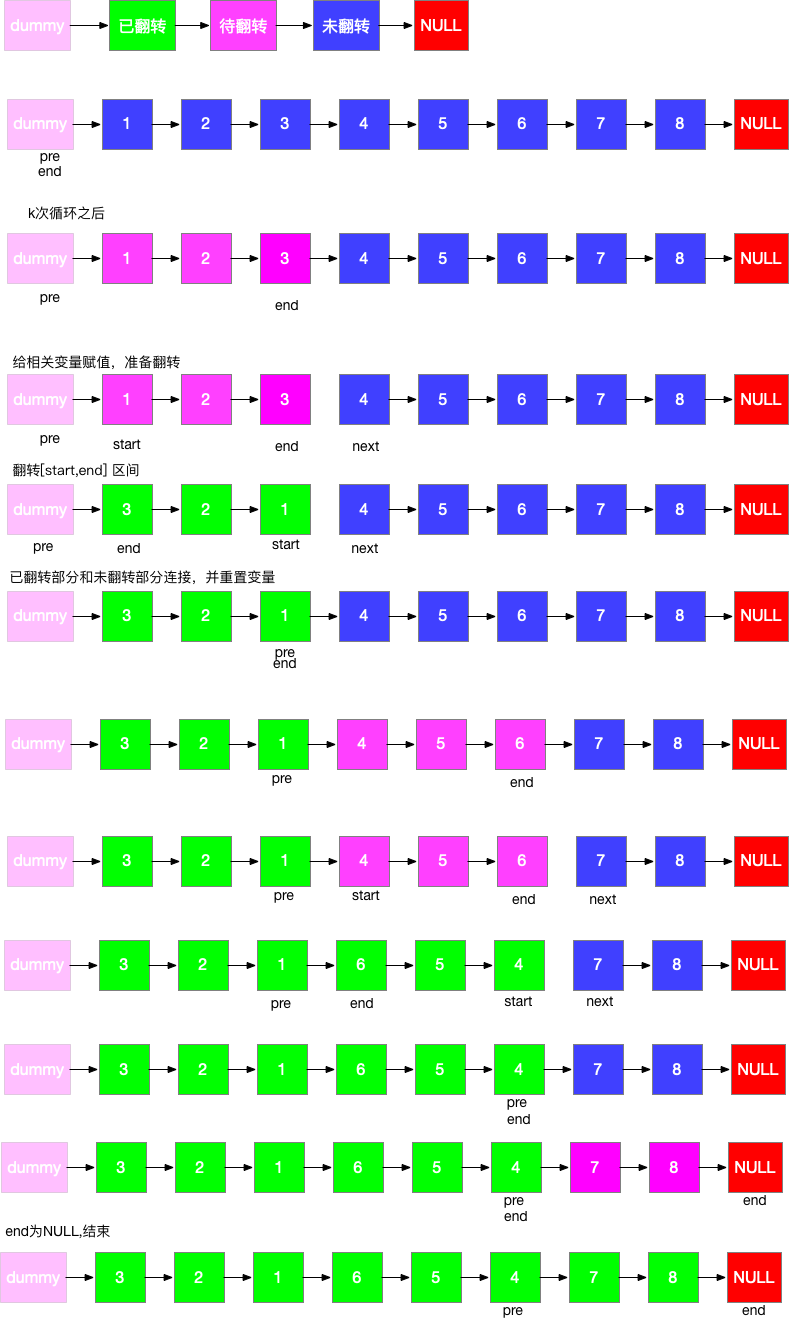
链表分区为已翻转部分+待翻转部分+未翻转部分;每次翻转前,要确定翻转链表的范围,这个必须通过 k 次循环来确定;需记录翻转链表前驱和后继,方便翻转完成后把已翻转部分和未翻转部分连接起来;初始需要两个变量 pre 和 end,pre 代表待翻转链表的前驱,end 代表待翻转链表的末尾;经过k次循环,end 到达末尾,记录待翻转链表的后继 next = end.next;翻转链表,然后将三部分链表连接起来,然后重置 pre 和 end 指针,然后进入下一次循环;特殊情况,当翻转部分长度不足 k 时,在定位 end 完成后,end==null,已经到达末尾,说明题目已完成,直接返回即可。
//Java
public ListNode reverseKGroup(ListNode head, int k) {
    ListNode dummy = new ListNode(0);
    dummy.next = head;

    ListNode pre = dummy;
    ListNode end = dummy;

    while (end.next != null) {
        for (int i = 0; i < k && end != null; i++) end = end.next;
        if (end == null) break;
        ListNode start = pre.next;
        ListNode next = end.next;
        end.next = null;
        pre.next = reverse(start);
        start.next = next;
        pre = start;

        end = pre;
    }
    return dummy.next;
}

private ListNode reverse(ListNode head) {
    ListNode pre = null;
    ListNode curr = head;
    while (curr != null) {
        ListNode next = curr.next;
        curr.next = pre;
        pre = curr;
        curr = next;
    }
    return pre;
}
//Java
class Solution {
    Map<Node, Node> cachedNode = new HashMap<Node, Node>();

    public Node copyRandomList(Node head) {
        if (head == null) {
            return null;
        }
        if (!cachedNode.containsKey(head)) {
            Node headNew = new Node(head.val);
            cachedNode.put(head, headNew);
            headNew.next = copyRandomList(head.next);
            headNew.random = copyRandomList(head.random);
        }
        return cachedNode.get(head);
    }
}
复杂度分析
时间复杂度:O(n),其中 n 是链表的长度。对于每个节点,我们至多访问其「后继节点」和「随机指针指向的节点」各一次,均摊每个点至多被访问两次。
空间复杂度:O(n),其中 n 是链表的长度。为哈希表的空间开销。
(2)迭代+节点拆分
思路及算法
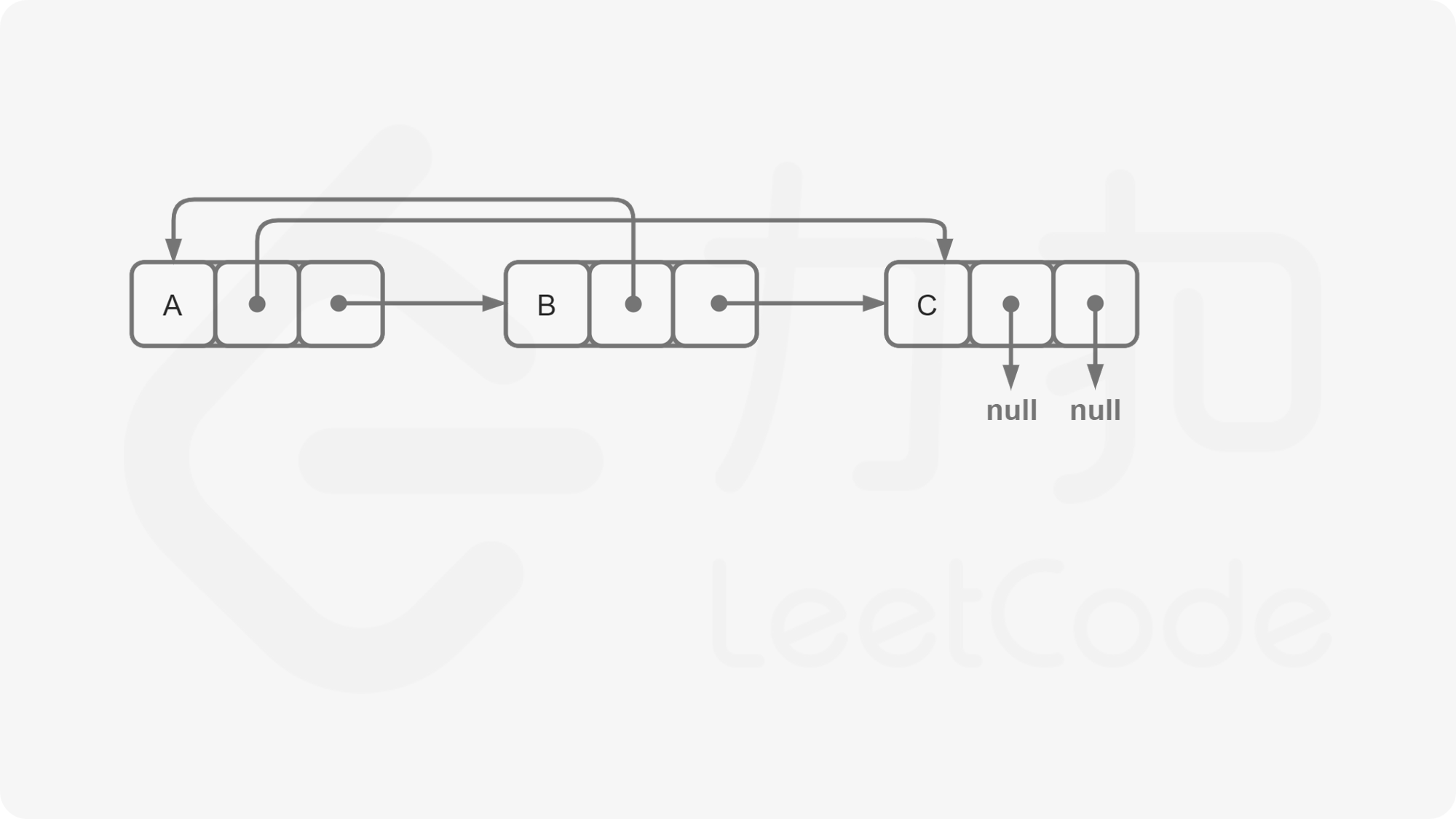
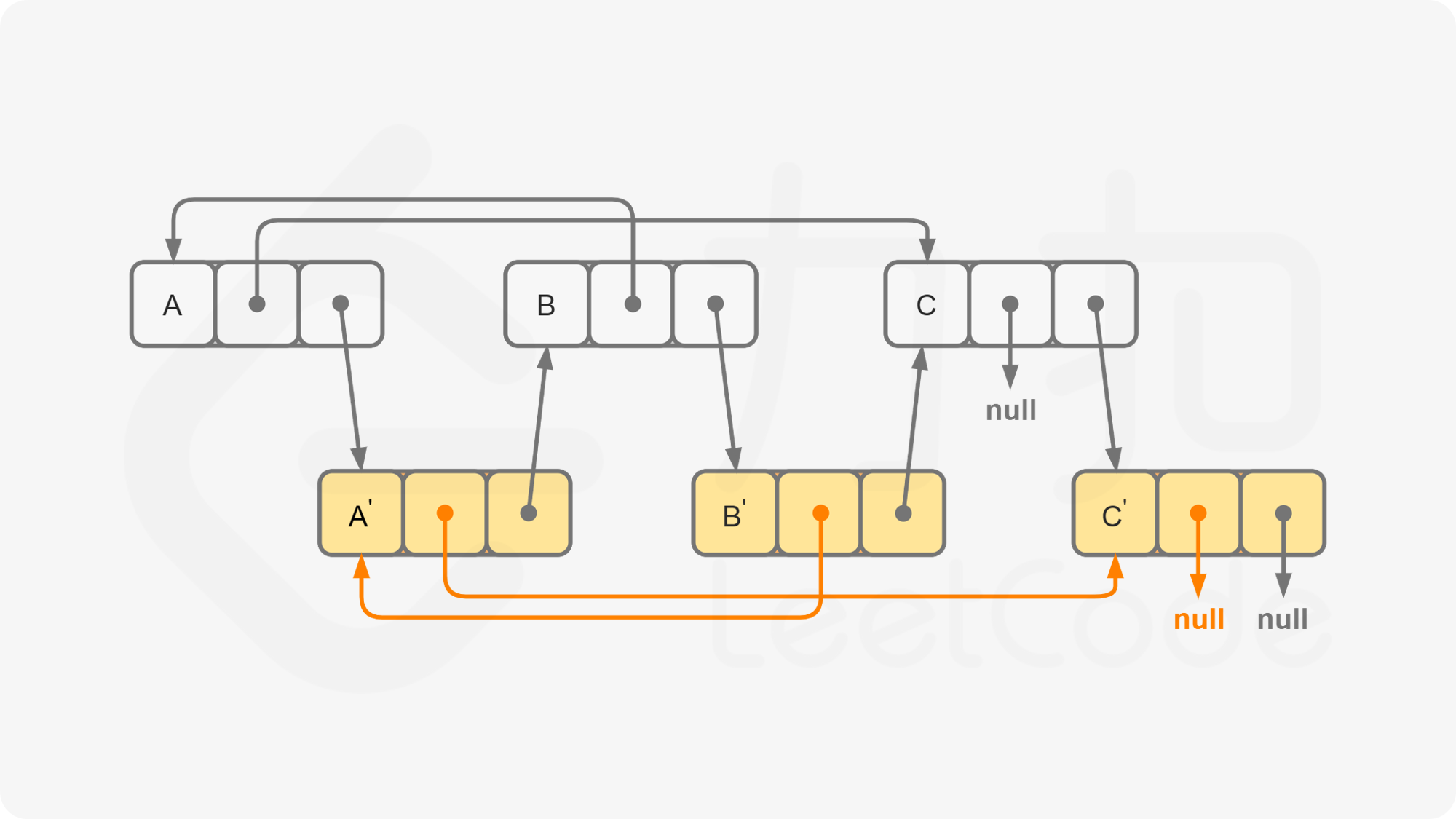
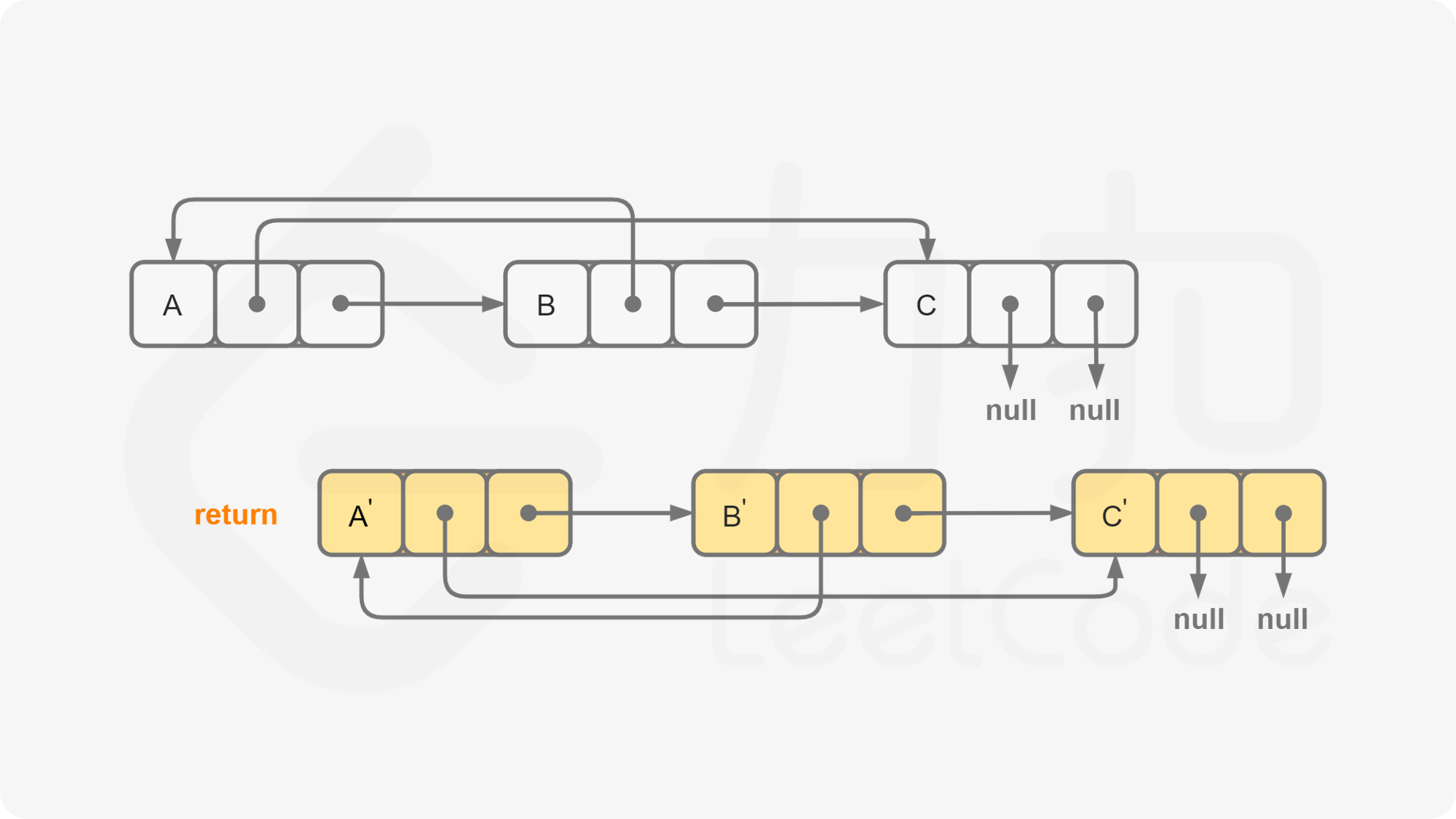
我们首先将该链表中每一个节点拆分为两个相连的节点,例如对于链表 A→B→C,我们可以将其拆分为 A→A′→B→B′→C→C′。对于任意一个原节点 S,其拷贝节点 S’ 即为其后继节点。这样,我们可以直接找到每一个拷贝节点 S′ 的随机指针应当指向的节点,即为其原节点 S 的随机指针指向的节点 T 的后继节点 T′ 。需要注意原节点的随机指针可能为空,我们需要特别判断这种情况。